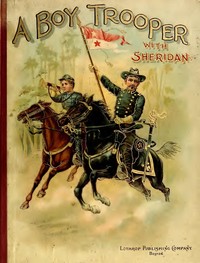
A Boy Trooper with Sheridan Book Summary
Published in 1901, A Boy Trooper with Sheridan by G.A. Henty is a classic example of boys' adventure literature from the late Victorian era. Henty was a prolific author known for his historical novels geared towards young readers, emphasizing courage, duty, and the British Empire. This book, while fictional, is set against the backdrop of a real historical event: General Philip Sheridan's campaign against the Cheyenne and Arapaho tribes in the American West.
The story follows young Jack, an English boy whose family emigrates to the United States. After his father is killed in a tragic accident, Jack finds himself alone and determined to make a life for himself. He quickly becomes enamored with the American military, particularly the cavalry, and manages to enlist as a trumpeter with General Sheridan's 7th Cavalry. The narrative details Jack's experiences during the harsh winter campaign against the Cheyenne, his bravery in the face of danger, and his growth from a naive boy into a resourceful and courageous young man. It's a tale of frontier life, military action, and the challenges of adapting to a new world.
One of the central themes of A Boy Trooper with Sheridan is the importance of courage and resilience in the face of adversity. Jack experiences significant loss early in the story, but rather than succumbing to despair, he channels his grief into a determination to prove himself. He endures the brutal conditions of the winter campaign – freezing temperatures, scarce food, and constant threat of attack – with unwavering spirit. This isn’t presented as reckless bravery, but as a quiet, steadfast commitment to duty and a refusal to give up, even when things seem hopeless. Henty emphasizes that true courage isn’t the absence of fear, but the ability to act despite it.
The book also strongly promotes the values of duty, loyalty, and discipline. Jack’s decision to enlist, despite his youth and lack of experience, is driven by a sense of obligation to his adopted country and a desire to contribute to a greater cause. He quickly learns the importance of following orders and working as part of a team, understanding that the success of the cavalry depends on the cooperation and dedication of every individual. His loyalty to his comrades and to General Sheridan is consistently demonstrated, even when faced with difficult choices. This highlights the Victorian ideal of selfless service and the importance of upholding one's commitments.
Finally, the novel, though problematic in its portrayal of Native Americans (discussed below), offers a glimpse into the challenges and complexities of frontier life and the expansion of the American West. It showcases the hardships faced by soldiers and settlers alike, the constant struggle for survival, and the need for adaptability and resourcefulness. Jack learns to ride, shoot, track, and survive in the wilderness, skills that are essential for his success and demonstrate the practical knowledge required to thrive in such a demanding environment. The book, therefore, serves as a historical snapshot, albeit a biased one, of a pivotal period in American history.
You might enjoy this book if:
- You are a fan of historical adventure stories.
- You appreciate classic boys' literature.
- You are interested in the American West and the Indian Wars (though be prepared for a very specific, and now outdated, perspective).
- You enjoy stories about overcoming adversity and demonstrating courage.
- You don't mind a somewhat simplistic and patriotic narrative.
While A Boy Trooper with Sheridan offers a thrilling adventure, it's crucial to acknowledge its deeply problematic portrayal of Native Americans. The book reflects the prevalent biases and stereotypes of its time, depicting them as savage enemies and justifying the displacement and subjugation of their people. Therefore, reading it today requires a critical lens and an understanding of the historical context. The book's value lies not in its accuracy regarding Native American cultures, but in its representation of Victorian ideals and its adventure narrative. However, due to the harmful stereotypes, a more nuanced and contemporary exploration of the same historical period is beneficial.
| Reading on Gutenburg | Free reading |
| Get Paperback Version on Amazon | Buy a book |
| Suggest Book : Bury My Heart at Wounded Knee Book | Get on Amazon |
A Boy Trooper with Sheridan is a captivating, if dated, adventure story that provides insight into Victorian values and the romanticized view of the American West. While enjoyable as a historical artifact, it’s essential to approach it with a critical understanding of its biases and to seek out more balanced and accurate accounts of the conflicts between settlers and Native Americans. It remains a fascinating example of its genre, but should be read as a product of its time, not as a definitive historical record.