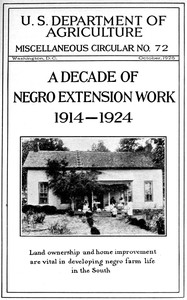
A decade of negro extension work, 1914-1924 Book Summary
This book, A Decade of Negro Extension Work, 1914-1924, provides a detailed account of the efforts to improve the lives of African Americans in the Southern United States through agricultural and home economics education. It highlights the work of the Negro Extension Service, which was established to disseminate information and resources to black farmers and their families. The book covers a wide range of topics, including the organization of extension work, the training of agents, and the various programs and activities undertaken to promote better living conditions, health, and economic stability within the black community.
A Decade of Negro Extension Work, 1914-1924 is a historical document that chronicles the first ten years of extension work among Negroes in the United States. It provides an in-depth look at the challenges and successes of the Negro Extension Service, which was part of the broader Cooperative Extension Service. The book details how the service worked to improve agricultural practices, home economics, and community development among African American populations, particularly in the rural South. It includes statistics, reports, and personal accounts that illustrate the impact of these efforts on the lives of black farmers and their families.
- Organization and Training: The book highlights the importance of a well-organized extension service and the training of competent agents. For example, it describes how the Negro Extension Service was structured and how agents were trained to effectively communicate with and educate black farmers.
- Community Engagement: The extension work was deeply rooted in community engagement. Agents worked closely with local leaders and organizations to understand the specific needs of the community and to tailor programs accordingly. This approach helped build trust and ensured that the programs were relevant and effective.
- Focus on Practical Skills: The extension programs emphasized practical skills that could be immediately applied to improve the lives of black farmers and their families. This included teaching better farming techniques, home economics, and health practices. For instance, agents taught farmers how to increase crop yields and how to preserve food to reduce waste.
- Challenges and Adaptations: The book also discusses the challenges faced by the Negro Extension Service, including limited resources and racial discrimination. Despite these obstacles, the service adapted and found innovative ways to deliver its programs, such as using community centers and churches as meeting places.
- Impact and Legacy: The book provides evidence of the positive impact of the extension work on the black community. It includes success stories of farmers who improved their livelihoods through the adoption of new techniques and practices. The legacy of this work is seen in the continued efforts to improve the lives of African Americans in the rural South.
This book is fit for you if you are interested in:
- The history of agricultural and home economics education in the United States.
- The role of extension services in improving the lives of rural communities, particularly African Americans.
- Understanding the challenges and successes of early 20th-century efforts to promote better living conditions and economic stability among black farmers.
- Learning about the strategies and approaches used to overcome racial discrimination and resource limitations in delivering extension services.
Yes, this book still matters today because it provides valuable insights into the historical efforts to improve the lives of African Americans in the rural South. It highlights the importance of community engagement, practical education, and the need to address systemic challenges in delivering effective extension services. The lessons learned from this period can still inform current efforts to promote agricultural development and economic stability in underserved communities.
If you are interested in exploring more about the history of African American agricultural and rural life, you might consider reading The New Negro: The Life of Alain Locke by Jeffrey C. Stewart, which provides a broader context of the cultural and social movements of the time.
| Reading on Gutenburg | Free reading |
| Get Paperback Version on Amazon | Buy a book |
| Suggest Book : The New Negro: The Life of Alain Locke Book | Get on Amazon |
A Decade of Negro Extension Work, 1914-1924 is a significant historical document that sheds light on the efforts to improve the lives of African Americans in the rural South through agricultural and home economics education. The book provides a detailed account of the challenges and successes of the Negro Extension Service and highlights the importance of community engagement, practical education, and overcoming systemic obstacles. The lessons from this period remain relevant today and can inform current efforts to promote agricultural development and economic stability in underserved communities.