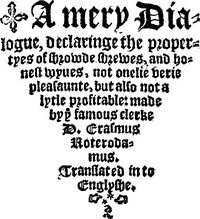
A Merry Dialogue Declaringe the Properties of Shrowde Shrews and Honest Wives Book Summary
The most striking 'lesson' – and one that reveals the book's deeply problematic core – is the belief that a wife’s primary virtue is obedience. The 'honest wife' is praised not for her intelligence, kindness, or ambition, but for her willingness to submit to her husband’s will in all matters. The dialogue repeatedly emphasizes that a woman should be silent, agreeable, and focused solely on domestic duties. This reflects the prevailing social order where women were considered legally and spiritually subordinate to men. The book doesn’t present this as an ideal to *inspire* women towards, but as a natural state they *should* occupy.
Another key idea is the importance of pre-marital investigation. The men in the dialogue spend considerable time discussing how to subtly (and not-so-subtly) assess a potential wife’s character. They suggest questioning her former servants, observing her behavior in public, and even trying to provoke a reaction to gauge her temper. This highlights a pervasive distrust of women and a desire to control their lives even before marriage. It’s a cynical approach, treating potential partners as subjects to be scrutinized rather than individuals to be respected.
The book also offers a rather brutal set of 'corrective' measures for dealing with a shrewish wife. These range from withholding affection and financial support to physical discipline (though the latter is presented with a degree of caution). The underlying assumption is that a wife’s disobedience is a moral failing that must be punished and corrected. This advice is deeply disturbing by modern standards and reflects a culture where domestic violence was often considered acceptable, even necessary, to maintain order. The 'taming' process is framed as a husband exercising his rightful authority, not as abuse.
Finally, the dialogue reveals a significant anxiety about female speech and agency. Shrews are characterized by their 'forwardness' and their willingness to speak their minds, while honest wives are expected to be quiet and reserved. The fear is that a woman who can articulate her own desires and opinions will disrupt the patriarchal order and challenge her husband’s authority. This fear of the 'talking woman' is a recurring theme in literature and social commentary of the period.
- Readers interested in social history: This book provides a unique and unfiltered look into 16th-century English attitudes towards gender roles and marriage.
- Students of Elizabethan literature: It's a valuable primary source for understanding the cultural context of plays like *The Taming of the Shrew*.
- Those fascinated by the evolution of marital expectations: The stark contrast between the advice offered here and modern relationship dynamics is thought-provoking.
- Readers who can approach historical texts with critical distance: It's crucial to recognize that the views expressed in this book are deeply problematic and do not reflect contemporary values.
| Reading on Gutenburg | Free reading |
| Get Paperback Version on Amazon | Buy a book |
| Suggest Book : Invisible Women: Data Bias in a World Designed for Men Book | Get on Amazon |