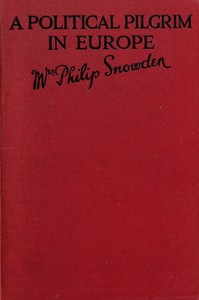
A political pilgrim in Europe Book Summary
Introduction
"A Political Pilgrim in Europe" is a classic work published in 1946, offering reflections on the political landscape of post-World War II Europe through the eyes of an anonymous traveler. The book captures the anxieties, aspirations, and the complex interplay of ideologies that defined the continent during a critical period of its history.
What is this book about?
The book chronicles the author's journeys across Europe, visiting various countries and interacting with their inhabitants. It's less a travelogue and more a series of observations and analyses of the political climate, societal structures, and the lingering effects of the war. The author explores themes like democracy, socialism, nationalism, and the search for meaning and stability in a fractured continent rebuilding itself. The tone is thoughtful, often pessimistic about the future but respectful of the individual's struggle within the political sphere.
Key Lessons
The book offers profound insights into the fragility of political order and the complexities of reconciling diverse ideologies. It doesn't offer easy solutions but rather a snapshot of the European consciousness grappling with immense change. One key lesson is the understanding that political ideologies are not purely abstract concepts but are deeply intertwined with the daily lives, fears, and hopes of ordinary people. The author observes how theoretical ideals get filtered through local realities and individual perspectives, often leading to nuanced, sometimes contradictory, beliefs.
Another lesson concerns the tension between collective identity and individual freedom. The author explores how nations, seeking to define themselves after the war, sometimes inadvertently curtail individual liberties under the guise of national unity or social justice. This isn't presented as a blanket criticism of nationalism but as an observation of a difficult balancing act that continues to resonate. The book also implicitly highlights the importance of skepticism towards authority and the need for continuous questioning of the political establishment, even when faced with daunting global challenges.
Furthermore, "A Political Pilgrim in Europe" serves as a reminder of history's enduring weight. The author's travels constantly reference the recent past of war, occupation, and ideological conflict, showing how these experiences continue to shape national characters and political trajectories long after the immediate events have passed. It underscores that understanding the present requires acknowledging the complex historical context that informs it.
Is this book fit for me?
This book is ideal for readers interested in European history, political philosophy, or the sociopolitical conditions of the mid-20th century. If you enjoy thoughtful travel writing that blends personal observation with political analysis, this will appeal to you. It's suitable for those seeking a critical perspective on the challenges of post-war reconstruction and the ambiguities of democracy. Readers fascinated by the interplay between individual lives and large-scale historical forces will find much to ponder. However, its dated nature might limit its direct relevance for those primarily focused on contemporary politics.
Does it still matter today?
Yes, absolutely. "A Political Pilgrim in Europe" remains highly relevant. Its exploration of the fundamental tensions between individual freedom and collective identity, the dangers of ideological rigidity, and the importance of historical awareness continues to resonate in our own times. The anxieties about democracy, the rise of nationalism, and the struggle to build stable, just societies in the face of global instability echo the concerns raised by the author decades ago. While the specific political parties and immediate post-war context have changed, the underlying questions about power, society, and the human condition explored in the book remain profoundly contemporary.
| Reading on Gutenburg | Free reading |
| Get Paperback Version on Amazon | Buy a book |
| Suggest Book : The Brothers Karamazov Book | Get on Amazon |
Conclusion
"A Political Pilgrim in Europe" offers a unique, introspective look at a pivotal moment in European history. While its immediacy might lessen for modern readers, its core themes of political uncertainty, the search for meaning, and the enduring human drama within political frameworks ensure its lasting value. It stands as a testament to the power of thoughtful observation in understanding complex times, reminding us that political pilgrimages, whether physical or intellectual, often reveal more about ourselves than about the places we visit. Its exploration of timeless political questions makes it a valuable read for anyone seeking to understand the enduring complexities of the political world.