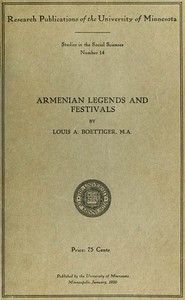
Armenian legends and festivals Book Summary
This book is a collection of traditional Armenian legends, folktales, and descriptions of key Armenian festivals and customs. It delves into the cultural, historical, and spiritual aspects of Armenian life, presenting stories from ancient times to the early 20th century. The book aims to preserve and share Armenia's intangible cultural heritage, offering insights into the beliefs, values, and social structures of the Armenian people.
1. The Enduring Power of Cultural Identity: The book illustrates how legends and festivals serve as living repositories of cultural identity. For example, the story of Saint George and the Dragon reflects Armenian values of courage and faith, while celebrations like Nowruz (Persian New Year, adapted in Armenia) highlight the blending of cultures. These narratives help Armenians connect with their history and maintain a sense of belonging, even during periods of dispersion or adversity.
2. Resilience and Historical Memory: Many Armenian legends, such as those recounting the survival of figures like Noah during the Great Flood or tales of heroism during times of persecution, underscore themes of resilience and hope. Festivals often commemorate historical events, like Saint Elias Day (May 20), which blends Christian and ancient traditions, serving as a reminder of both suffering and endurance. These elements provide a framework for understanding historical traumas and collective memory.
3. Connection to Nature and Ancestral Roots: Numerous festivals, like Vashliani (St. George's Day), involve agricultural cycles, hunting, and purification rites, showing a deep connection to the land and natural rhythms. Legends often feature nature elements (mountains, rivers, stars) as characters or settings, reflecting an ancient worldview where humans are part of a larger cosmic order. This fosters a sense of continuity with ancestral practices and a grounding in the physical environment.
4. The Role of Storytelling in Community Building: The act of sharing legends and participating in festivals strengthens social bonds within Armenian communities. Storytelling, often passed down orally, creates shared experiences and reinforces communal values. Festivals bring people together, creating spaces for collective celebration, remembrance, and the reaffirmation of cultural norms and traditions.
5. Universal Themes within a Specific Context: While deeply rooted in Armenian culture, many themes explored—such as the triumph of good over evil, the importance of hospitality, the consequences of pride, and the power of faith—resonate with universal human experiences. This allows readers unfamiliar with Armenia to appreciate the cultural specificity while recognizing the broader human narratives embedded within the folklore.
If you are interested in:
- Armenian history and culture
- Folklore, mythology, and traditional storytelling
- Cultural heritage and identity
- Religious and ethnic minority studies
- Understanding the cultural roots of modern Armenia
- Genealogy or exploring family traditions
Yes, this book remains highly relevant today. The legends and festivals described continue to be actively practiced and celebrated within the Armenian diaspora and in Armenia itself. They provide a vital link to ancestral roots, helping communities maintain their cultural identity in a rapidly changing world. In an era of globalization and cultural dilution, these traditions offer a source of unity, continuity, and resilience. They also serve as important educational tools for teaching younger generations about their heritage and history. Furthermore, understanding these cultural expressions can foster cross-cultural understanding and appreciation.
| Reading on Gutenburg | Free reading |
| Get Paperback Version on Amazon | Buy a book |
| Suggest Book : <div class='container'><div class='card'><div class='card-body'><p>'The Armenian Genocide and Beyond: A Concise History'</p></div></div></div> Book | Get on Amazon |
In conclusion, 'Armenian Legends and Festivals' offers a valuable window into the soul of Armenian culture. It showcases the power of oral tradition, the significance of communal celebrations, and the enduring themes that connect past and present generations. While focused on Armenia's specific cultural context, its exploration of identity, resilience, and the human condition makes it a fascinating read for anyone interested in folklore, cultural studies, or simply appreciating the richness of diverse human traditions.