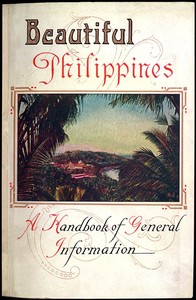
Beautiful Philippines: A Handbook of General Information Book Summary
The book provides valuable context for understanding the Philippines during a pivotal historical period:
Historical Documentation: It meticulously details the administrative divisions, major cities, landmarks, and geographical features of the time. For example, it describes the then-newness of infrastructure projects like the Manila Railroad and the ongoing development of Luzon's coalfields, offering insights into the nation's progress under American administration.
Cultural Observation: While not a deep anthropological study, the book includes sections on customs, traditions, and the daily lives of Filipinos, reflecting the social norms and values of the era. These descriptions, though sometimes tinged with the perspective of an outsider, provide context for the cultural landscape that shaped modern Filipino identity.
Geographical Overview: Detailed descriptions of the islands, their climates, and natural resources (like the rich mineral deposits of Mindanao or the agricultural potential of Mindanao) underscore the strategic importance the United States placed on the archipelago's resources and its role in the global economy.
Colonial Perspective: The book consistently frames the Philippines within the context of American governance and its aims. This includes explanations of the structure of the Philippine government, the role of the United States in trade, and the rationale behind policies implemented during that period, which is crucial for understanding the transition from Spanish to American rule.
If you are interested in history, particularly the early 20th-century Philippines, American colonialism, or old travel literature, this book is definitely for you. It offers:
- A primary source document from the American colonial era.
- Detailed geographical and historical information not easily found elsewhere.
- Insights into the perspective of American administrators and travelers during that time.
- Information on travel, customs, and infrastructure of the period.
- A unique snapshot of the Philippines' development stage in the early 1900s.
Yes, this book certainly still matters today, primarily as a historical artifact and a window into the past. It helps us understand:
The Roots of Modern Institutions: It provides context for the administrative and governmental structures that the Americans established, many of which have persisted in some form. Understanding this helps trace the evolution of the modern Philippine state.
The Legacy of Colonialism: Reading about the motivations and descriptions from the colonial era offers critical perspective on the long-term impacts of foreign rule, both positive (like infrastructure development) and negative (like cultural disruption or economic exploitation).
Historical Continuity: It demonstrates how the Philippines looked, functioned, and was perceived less than a century ago, highlighting both continuity and change over time.
Educational Value for Students: For students of history, political science, or literature, it serves as an excellent primary source material.
| Reading on Gutenburg | Free reading |
| Get Paperback Version on Amazon | Buy a book |
| Suggest Book : The Longest Day Book | Get on Amazon |