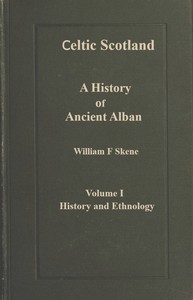
Celtic Scotland Book Summary
Introduction
"Celtic Scotland" by Ewan W. MacColl offers a unique perspective on the history of Scotland, focusing specifically on the period often labeled as the 'Celtic' era, which spans roughly from the arrival of the Picts and Gaels in the Iron Age through to the establishment of the Kingdom of Alba and the Wars of Scottish Independence, and even into the Highland Clearances. This book moves beyond the traditional narratives focusing solely on kings and battles to explore the intricate tapestry of everyday life, culture, beliefs, social structures, and language that defined this period and shaped the very identity of Scotland.
What is this book about?
"Celtic Scotland" delves deep into the lives of the people who inhabited Scotland during what is conventionally termed the Celtic period, roughly from the 5th century CE to the 19th century. It challenges the often simplistic or romanticized view of this era, presenting a more nuanced picture based on archaeological evidence, historical sources, place names, and linguistic analysis. The book explores the complex interactions between different groups (Picts, Gaels, Britons), the spread and influence of Christianity, the development of unique legal systems like Brehon Laws, the importance of kinship and clan structures, the role of mythology and folklore, and the gradual changes in language and society over time. It aims to provide a comprehensive understanding of Scotland's formative years, moving beyond political history to encompass the cultural and social fabric that defined the Scottish people during this crucial time.
Key Lessons
The book "Celtic Scotland" offers several profound insights that reshape our understanding of Scotland's past:
1. **Beyond Kings and Battles:** It moves the focus from the actions of individual rulers (like Kenneth MacAlpin or William Wallace) to the everyday lives, beliefs, and social structures of the ordinary people. We learn about the importance of kinship groups (clans), the role of local chieftains, the significance of land and territory beyond royal ambition, and the complex web of alliances and rivalries that shaped the period.
2. **Cultural Synthesis, Not Simple Origins:** "Celtic" Scotland wasn't a monolithic entity defined solely by a single culture or people. The book emphasizes the dynamic interplay and blending of Pictish, Gaelic, and later British traditions. It highlights how these distinct groups interacted, intermarried, and gradually formed a shared identity, demonstrating history as a process of continuous cultural exchange and adaptation, not a simple takeover or imitation.
3. **The Power of Myth and Language:** The book underscores how mythology, legends (like those of Cú Chulainn, even if adapted), saints' lives, and the very structure of the Gaelic language (Irish, which heavily influenced early Scots) were crucial tools for shaping identity, asserting power, and understanding the world. Understanding these elements is key to grasping the mindset and worldview of the period.
4. **Christianity as a Unifier and Transformative Force:** While acknowledging pre-existing beliefs, the book highlights how Christianity arrived and became integrated into Celtic society, acting as a unifying factor, a source of learning and literacy, and a catalyst for change, building monasteries that became centers of culture and power, and influencing legal systems and social norms.
5. **Continuity and Change:** It avoids presenting the period as static. While rooted in the past, "Celtic" Scotland was also a period of significant change, including the adoption of literacy, the impact of climate and geography, the role of trade and external influences, and the slow transition towards the more centralized kingdoms and eventually the modern state.
Is this book fit for me?
This book is ideal if you:
- Are interested in the history of Scotland, particularly its early and medieval periods.
- Enjoy exploring the cultural and social aspects of history, rather than just political chronology.
- Want to move beyond simplified or romanticized versions of Scottish history.
- Are curious about the origins and development of Scottish identity.
- Appreciate well-researched, evidence-based historical analysis that challenges conventional narratives.
- Have an interest in archaeology, linguistics, or how historical sources (written and oral) can be interpreted.
It may be less suitable if you are primarily interested in military history, later periods of Scottish history (post-1707), or if you find dense historical analysis challenging.
Does it still matter today?
Yes, absolutely. Understanding the 'Celtic' period is fundamental to grasping the deep roots of Scottish identity, national consciousness, and cultural values. The legacy of this era—its mythology, language (Gaelic and Scots), sense of place, and historical narratives—continues to influence modern Scottish society, politics, and arts. Debunking myths and understanding the complex formation of the nation helps combat contemporary misunderstandings and provides a richer context for understanding current national identity debates and the enduring cultural significance of figures and events from that distant past.
| Reading on Gutenburg | Free reading |
| Get Paperback Version on Amazon | Buy a book |
| Suggest Book : The Making of Celtic Music in Scotland Book | Get on Amazon |
Conclusion
"Celtic Scotland" by Ewan W. MacColl provides a vital and engaging exploration of Scotland's foundational period. By focusing on the cultural, social, and linguistic aspects alongside the political, it offers a richer, more human understanding of how Scotland became Scotland. It challenges readers to rethink simplistic historical narratives and appreciate the complex, dynamic processes that shaped the nation's identity over centuries. For anyone seeking a deeper connection to Scotland's past, this book is an essential and thought-provoking read.