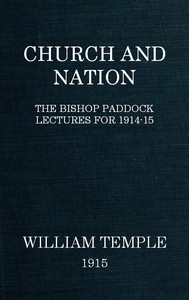
Church and Nation The Bishop Paddock Lectures for 1914-15 Book Summary
Introduction
This summary covers W.H. Green's 1914-1915 Bishop Paddock Lectures, titled 'Church and Nation'. The book delves into the complex relationship between the established Church of England and the British state during a period of significant societal change, including the rise of secularism and the impact of the Great War.
What is this book about?
'Church and Nation' examines the history and principles governing the connection between the Church of England and the British government. Green explores the origins of the established church, the meaning and limits of its 'Establishment', and the ongoing tensions between religious institutions and the state. He considers the role of the Church in national life, the nature of religious influence, and the challenges posed by modern secularism and the First World War to traditional understandings of the relationship.
Key Lessons
The Concept of Establishment
Green traces the development of the 'Established Church' in England, explaining how it evolved from a national religion with exclusive privileges to a symbolic connection with the state, maintained by law but without the power to coerce non-members. He details the historical debates and shifts in understanding surrounding its status.
The Limits of State Interference
While acknowledging the state's role in upholding the established church, Green argues strongly for the principle that the state should not interfere with the internal affairs or doctrines of religious bodies. He emphasizes the importance of religious freedom and the separation of ecclesiastical and governmental power, even within the framework of an established church.
Beyond Legal Status: The 'Spirit of Establishment'
Green goes beyond the mere legal definition of the Establishment. He explores the 'spirit of Establishment' – the idea that the national church should reflect and uphold the highest Christian ideals, possess intellectual vitality, and maintain a positive relationship with the community. He argues that this spirit is more crucial than the letter of the law.
The Challenge of Secularism
Green confronts the reality of increasing secularism in modern society. He considers how the established church can maintain its relevance and authority in a world where belief is no longer universal, and how its relationship with the state must adapt to these changing circumstances.
The Impact of War
He analyzes the First World War's effect on religious belief and practice, and its implications for the church-nation relationship. The war tested the established church's role and raised profound questions about patriotism, sacrifice, and the nature of faith in crisis.
Is this book fit for me?
This book is ideal for students and scholars of church history, political theology, British history, or the history of secularism. It is also valuable for anyone interested in the historical development of the relationship between religion and government, particularly within a constitutional monarchy. Readers seeking to understand the complexities of an established church in a modern, pluralistic society will find Green's analysis insightful, even if specific historical contexts differ.
Does it still matter today?
Yes, absolutely. While the specific context of the British established church is unique, the fundamental questions explored in this book – the nature of the relationship between religion and the state, the meaning and limits of religious establishment, the challenges of secularism, and the role of religious institutions in a pluralistic society – remain profoundly relevant in our contemporary world. Issues of religious freedom, the accommodation of diverse beliefs within national frameworks, and the role of religion in public life continue to be significant topics of debate globally.
Therefore, I suggest reading:
"God's Continent: A History of the European Union" by Timothy Snyder
Why? While focusing on the EU, this book examines how modern states, particularly in Europe, have managed religious diversity and the legacy of historical conflicts (including those related to religion) in building political communities. It provides a broader comparative perspective on the challenges of secularism and state-religion relationships in a modern context, complementing Green's historical analysis of the British case.
| Reading on Gutenburg | Free reading |
| Get Paperback Version on Amazon | Buy a book |
| Suggest Book : The God Delusion Book | Get on Amazon |
Conclusion
W.H. Green's 'Church and Nation' provides a thoughtful and historically grounded exploration of the intricate dynamics between the Church of England and the British state. It offers valuable insights into the historical development of the concept of religious establishment and the ongoing tension between the secular and the sacred in political life. While rooted in its specific historical moment, its analysis of enduring questions about religion, state, and society makes it a worthwhile read for anyone seeking a deeper understanding of these perennial issues.