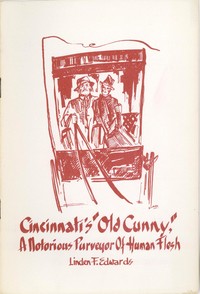
Cincinnati's "Old Cunny": A Notorious Purveyor of Human Flesh Book Summary
Published in 1897, “Cincinnati’s ‘Old Cunny’” by Charles H. Allen is a chilling and sensationalized account of a purported serial killer and cannibal operating in Cincinnati, Ohio, during the mid-19th century. It’s a fascinating, if disturbing, piece of American true crime history, presented in a style typical of the penny dreadfuls and sensational journalism of the era. Be warned: the content is graphic and relies heavily on rumor and speculation, as definitive proof was scarce.
The book details the alleged crimes of one “Old Cunny,” a man described as a butcher and a shadowy figure who preyed on the vulnerable – particularly the poor and immigrant populations of Cincinnati. Allen recounts stories of missing persons, suspicious activities around Cunny’s meat shop, and gruesome rumors of human remains being sold as pork. The narrative weaves together police investigations, eyewitness accounts (often unreliable), and Allen’s own dramatic interpretations to build a case for Cunny’s guilt. However, it's crucial to understand that much of the evidence is circumstantial and the book reads more like a fictionalized thriller based on local legends than a meticulously documented historical record.
One of the most striking aspects of “Old Cunny” is how easily fear and prejudice can fuel a moral panic. Cincinnati in the 1850s was a rapidly growing city with a significant influx of immigrants and a stark divide between rich and poor. Allen expertly taps into existing anxieties about these social changes, portraying Cunny as a monstrous embodiment of the dangers lurking within the city’s underbelly. The lack of concrete evidence didn’t prevent the rumors from spreading and taking root, demonstrating the power of suggestion and the willingness of people to believe the worst about those they perceive as ‘other.’
The book also provides a glimpse into the early days of criminal investigation and the limitations of forensic science. The police relied heavily on informants, eyewitness testimony, and rudimentary methods of tracking suspects. The absence of modern techniques like DNA analysis or detailed record-keeping meant that many leads went cold and the truth remained elusive. The investigation into Cunny’s activities is a frustratingly incomplete picture, highlighting the challenges faced by law enforcement in the 19th century and the potential for miscarriages of justice.
Furthermore, “Old Cunny” illustrates the sensationalistic nature of journalism and the public's appetite for gruesome stories. Allen, a journalist himself, clearly understood how to captivate his audience with vivid descriptions and dramatic embellishments. The book’s success likely stemmed from its ability to exploit people’s fears and anxieties, offering a thrilling (though likely exaggerated) account of a real-life monster. This tendency to prioritize sensationalism over accuracy continues to be a challenge in modern media.
Finally, the enduring myth of Old Cunny speaks to the power of urban legends and the human fascination with the macabre. Despite the lack of definitive proof, the story has persisted for over a century, evolving and adapting with each retelling. It serves as a reminder that even the most outlandish rumors can take on a life of their own, shaping our perceptions of the past and influencing our understanding of the present.
This book is a good fit for readers who:
- Are interested in true crime, particularly historical cases.
- Enjoy reading about urban legends and folklore.
- Are fascinated by the social history of 19th-century America.
- Can approach the material with a critical eye, recognizing its sensationalized and potentially inaccurate nature.
- Are not easily disturbed by graphic descriptions (though these are relatively restrained for the era).
Yes, the book still matters today. While the specifics of the “Old Cunny” case remain shrouded in mystery, the themes it explores – the dangers of moral panic, the fallibility of eyewitness testimony, the sensationalism of the media, and the enduring power of urban legends – are all highly relevant in the 21st century. We continue to grapple with issues of social prejudice, misinformation, and the ethical responsibilities of journalism.
| Reading on Gutenburg | Free reading |
| Get Paperback Version on Amazon | Buy a book |
| Suggest Book : In Cold Blood Book | Get on Amazon |
“Cincinnati’s ‘Old Cunny’” is a disturbing and captivating read, offering a glimpse into a dark chapter of American history. While its factual accuracy is questionable, the book’s enduring appeal lies in its ability to tap into our deepest fears and anxieties. It serves as a cautionary tale about the dangers of unchecked rumor and the importance of critical thinking.