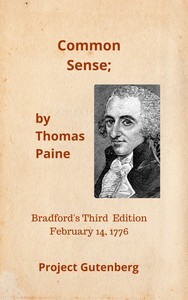
Common Sense Book Summary
The Illegitimacy of Hereditary Rule: Paine’s most striking argument is his scathing critique of monarchy and hereditary succession. He asks readers to consider the absurdity of one person ruling over others simply by accident of birth. He argues that all men are born equal and that no one has a natural right to govern another. This was a radical idea in the 18th century, where divine right of kings was still a widely accepted concept. Paine uses vivid imagery and rhetorical questions to expose what he sees as the inherent injustice and irrationality of inherited power. He compares the idea of a king to a common criminal, asking why one should be held in higher esteem simply because of their lineage.
The Importance of Representation and Self-Governance: Paine champions the idea that government should derive its power from the consent of the governed. He argues that the colonies had no real representation in the British Parliament and were therefore being subjected to unjust laws and taxation without their agreement. He believed that a government accountable to its people, through elected representatives, was essential for protecting liberty and ensuring prosperity. He envisioned a government structured to serve the interests of the citizens, not the whims of a distant king.
The Unique Potential of America: Paine doesn’t just argue *against* British rule; he passionately argues *for* America. He portrays the colonies as a land of opportunity, blessed with natural resources and a diverse population. He believes America has the potential to become a beacon of freedom and a model for the rest of the world. He emphasizes the geographical advantages of being separated from Europe, allowing America to develop its own identity and avoid being entangled in European conflicts. This optimistic vision of America’s future was a powerful motivator for colonists considering independence.
The Power of Persuasive Language and Accessible Argument: *Common Sense* wasn’t successful because of complex philosophical reasoning. It was successful because Paine wrote in plain language, avoiding jargon and appealing directly to the emotions and common sense of the average colonist. He used powerful metaphors, analogies, and rhetorical questions to make his arguments clear and compelling. This demonstrates the power of effective communication in shaping public opinion and driving social change. He understood that to convince people, you needed to speak *to* them, not *at* them.
- History Buffs: If you're interested in the American Revolution and the origins of the United States, this is essential reading.
- Political Science Enthusiasts: Paine's arguments about representation, self-governance, and the legitimacy of power remain relevant to political debates today.
- Readers Interested in Rhetoric and Persuasion: *Common Sense* is a masterclass in how to use language to influence public opinion.
- Those Seeking Inspiration for Social Change: Paine’s courage and conviction in challenging the status quo can be inspiring.
- Anyone wanting a quick, impactful read: The pamphlet is relatively short and easily digestible.
| Reading on Gutenburg | Free reading |
| Get Paperback Version on Amazon | Buy a book |
| Suggest Book : The Declaration of Independence Book | Get on Amazon |