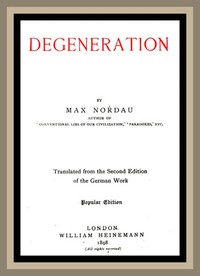
Degeneration Book Summary
Degeneration by Max Nordau is a cultural critique published in 1892 that examines the perceived decline in societal values and artistic standards of the late 19th century. Nordau, a physician and social critic, uses his medical background to analyze various forms of art and literature, arguing that many contemporary artists and writers exhibit signs of mental and moral degeneration. The book is a reaction to the rise of modernist movements in art and literature, which Nordau views as symptoms of a broader societal malaise.
Degeneration is a scathing critique of modern art, literature, and culture from the perspective of a physician who sees these as manifestations of mental illness and moral decay. Nordau applies a pseudo-scientific approach to diagnose what he perceives as the pathological conditions of contemporary artists and writers, linking their work to hysteria, egomania, and other forms of psychological disorder. The book is a polemic against the avant-garde movements of the time, including Symbolism, Decadence, and Aestheticism, and it reflects the anxieties of the fin de siècle period.
- Cultural Criticism through a Medical Lens: Nordau uses his medical expertise to critique contemporary art and literature, arguing that they are products of degenerate minds. He believes that the unconventional styles and themes of modern art are indicative of mental illness and that these works are a danger to society.
- The Dangers of Modernism: Nordau sees modernist movements as threats to traditional values and societal order. He argues that the rejection of established norms in art and literature is a sign of moral decay and that such works can lead to the degeneration of society as a whole.
- The Role of the Artist in Society: Nordau believes that artists and writers have a responsibility to uphold moral and aesthetic standards. He criticizes those who prioritize individual expression over societal well-being, viewing their work as selfish and destructive.
- The Impact of Urbanization and Modern Life: Nordau links the perceived decline in artistic and moral standards to the rapid changes brought about by urbanization and industrialization. He argues that the stresses of modern life contribute to the mental and moral degeneration of individuals, which is then reflected in their creative output.
- The Need for Social Reform: Despite his harsh critique, Nordau believes that society can be saved from degeneration through education, moral reform, and the promotion of healthy, traditional values. He calls for a return to rationality and order in both art and life.
This book is fit for readers interested in the cultural history of the late 19th century, the origins of modernist movements, and the intersections of art, literature, and medicine. It is also relevant for those studying the history of cultural criticism and the anxieties of the fin de siècle period. However, readers should be aware that Nordau's views are highly controversial and often considered prejudiced by modern standards.
While Degeneration is a product of its time and reflects the biases and anxieties of the late 19th century, it remains a significant historical document that sheds light on the cultural debates of the period. Its influence can be seen in later critiques of modernism and in discussions about the role of art in society. However, its medicalized approach to cultural criticism is largely discredited today, and its views on mental illness and morality are considered outdated.
| Reading on Gutenburg | Free reading |
| Get Paperback Version on Amazon | Buy a book |
| Suggest Book : The Painted Word Book | Get on Amazon |
In conclusion, Degeneration by Max Nordau is a provocative and controversial work that offers a unique perspective on the cultural upheavals of the late 19th century. While its medicalized critique of modern art and literature is no longer widely accepted, the book remains an important historical document that provides insight into the anxieties of the time. For readers interested in exploring similar themes from a more contemporary perspective, The Painted Word by Tom Wolfe offers a critical examination of the modern art world and its relationship to society.