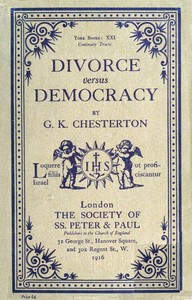
Divorce versus Democracy Book Summary
Introduction
Explore the surprising connection between personal family life and the health of democracy in this thought-provoking book. "Divorce versus Democracy" examines how the rise of divorce in the 20th century reflects and influences the trajectory of democratic movements worldwide.
What is this book about?
The book argues that the increase in divorce rates, particularly in Western democracies, is linked to the expansion of individual freedoms and democratic principles. It suggests that divorce represents a break from traditional social structures, symbolizing a shift towards individual autonomy and personal choice. The author analyzes how this personal revolution intersects with broader political changes, questioning whether the erosion of traditional family structures could potentially weaken the foundations of democracy itself.
Key Lessons
The book presents several interconnected ideas:
First, it argues that the divorce revolution was not merely a social change but also a political one, representing a challenge to the authority of the family as a primary institution in society. The author uses historical examples, like the changing laws regarding marriage and divorce, to illustrate this point. For instance, the legalization of no-fault divorce in the US during the 1970s is presented not just as a social change, but as a political act weakening the traditional power structures.
Second, the book explores the paradoxical relationship between personal freedom and social stability. While divorce grants individuals greater freedom, the book posits that too rapid or widespread a change in family structures could potentially undermine the social cohesion necessary for stable democracies. It examines arguments from both sides – those who see divorce as essential for personal liberty and those who worry about its societal consequences.
Third, the analysis extends to the global stage, suggesting that the patterns seen in Western democracies might have parallels or implications for other societies undergoing rapid social change. The book encourages readers to think critically about the unintended consequences of social reforms and the complex interplay between personal lives and political systems.
Is this book fit for me?
This book is ideal for readers interested in:
- The intersection of social trends and political theory.
- Understanding the history of family law and its political dimensions.
- Critical analysis of the concept of individual freedom versus social responsibility.
- The relationship between personal choices and the broader society.
- Academic or general readers engaged with social science or political philosophy.
Does it still matter today?
Yes, "Divorce versus Democracy" remains highly relevant. While the specific historical context focuses on the 20th century, its exploration of the tension between individual rights and social structures continues to resonate. Contemporary debates about marriage equality, single-parent families, gender roles, and the perceived decline of traditional institutions all touch upon the themes this book introduced. The questions it raised about the relationship between personal liberation and societal stability are still central to understanding modern political and social landscapes. The rapid changes in family structures driven by evolving social norms and policies make the core arguments of the book pertinent to current discussions.
| Reading on Gutenburg | Free reading |
| Get Paperback Version on Amazon | Buy a book |
| Suggest Book : The Second Sex Book | Get on Amazon |
Conclusion
"Divorce versus Democracy" offers a unique perspective on a significant social trend by framing it within a political context. It challenges readers to reconsider the seemingly personal act of divorce and its potential connections to larger questions about freedom, authority, and the very nature of democratic societies. While the book is a product of its time, its core insights into the complex relationship between individual lives and political systems provide valuable food for thought, particularly when considering works like Simone de Beauvoir's "The Second Sex" which delves into the historical construction of gender roles and their societal implications.