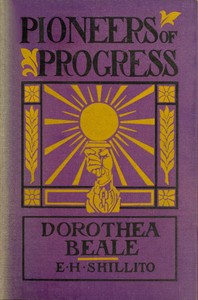
Dorothea Beale: Principal of the Cheltenham Ladies' College, 1858-1906 Book Summary
Introduction
This book delves into the life and work of Dorothea Beale, who served as the Principal of Cheltenham Ladies' College from 1858 until her death in 1906. It portrays her as a pioneering figure in the history of British women's education during a period of significant social and educational change. The narrative explores her leadership, her efforts to reform the curriculum, and her impact on generations of female students, placing her actions within the challenging context of the Victorian era and the burgeoning women's movement.
What is this book about?
The book chronicles Dorothea Beale's tenure at Cheltenham Ladies' College, examining the challenges she faced and the successes she achieved. It details her background, her philosophy on education, and how she navigated the constraints of her time to advocate for a more rigorous and intellectually stimulating education for women. The text likely covers her architectural vision (commissioning the now-famous college buildings), her pedagogical innovations, her role as a public speaker and campaigner, and the personal sacrifices she made. It aims to reconstruct her legacy and illuminate the pivotal role she played in shaping elite female education in Britain during the late 19th and early 20th centuries.
Key Lessons
This book offers valuable insights into the intersection of leadership, education reform, and societal evolution. One key lesson concerns the power of vision and persistence in driving change within established institutions. Beale's story demonstrates how a single determined individual, operating within the constraints of her time, could fundamentally reshape an educational institution, pushing it towards higher academic standards and broader intellectual horizons. For example, she moved the college from rented premises to a purpose-built, aesthetically pleasing campus, symbolizing its ambition and permanence.
Another crucial lesson is the delicate balance between maintaining institutional traditions and embracing necessary change. Beale was not a revolutionary who discarded everything old, but rather a leader who selectively reformed. She championed classical languages and a demanding curriculum while also recognizing the need to prepare girls for roles beyond traditional domestic spheres, subtly advocating for broader horizons. This shows that effective reform requires navigating the existing structures and alliances within an institution.
Furthermore, the book highlights the significance of educational leadership in fostering female empowerment during periods of social constraint. Beale used her position not only to educate girls but also to speak publicly on educational matters, thereby contributing to the wider discourse on women's rights and capabilities. Her story serves as a reminder that education, even within the limitations of the past, was a powerful tool for challenging gender norms and preparing women for active participation in society, even if not always in the political arena.
Is this book fit for me?
This book would be highly suitable if you are interested in:
- The history of British women's education, particularly the 19th and early 20th centuries.
- Biographical accounts of influential Victorian-era figures, especially those who challenged gender conventions.
- The development of elite boarding schools and their societal impact.
- Leadership studies, focusing on educational leadership within historical contexts.
- The social history of England during the Victorian and Edwardian periods.
It is ideal for students of history, education, gender studies, and anyone with a general interest in understanding the forces that shaped modern educational institutions and the role of women in their development.
Does it still matter today?
Yes, absolutely. Dorothea Beale's story remains highly relevant today. Her struggles against societal limitations to provide rigorous education for women echo ongoing debates about educational equity, curriculum development, and the role of schools in preparing students for an ever-changing world. Her example demonstrates that systemic change, even gradual reform, is possible through dedicated leadership, highlighting the importance of visionaries within institutions. Understanding her context helps us appreciate how far women's education has come and the hurdles overcome, providing valuable historical perspective. Her story serves as a powerful case study on navigating tradition versus innovation, a challenge faced by educational leaders across all times and places.
| Reading on Gutenburg | Free reading |
| Get Paperback Version on Amazon | Buy a book |
| Suggest Book : Educating Alice: A History of Girls' Education in America Book | Get on Amazon |
Conclusion
In conclusion, the book on Dorothea Beale offers a fascinating and important portrait of a key figure in the history of British women's education. It provides detailed insights into her leadership, reforms, and enduring legacy at Cheltenham Ladies' College. By exploring the challenges and successes of her long tenure, the book not only enriches our understanding of a specific institution and period but also offers timeless lessons about educational leadership, the pursuit of excellence, and the ongoing fight for educational equality. It stands as a valuable resource for anyone interested in the past, present, and future of education and gender. Tags : Biographies History - Schools & Universities Teaching & Education