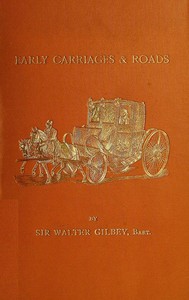
Early Carriages and Roads Book Summary
Introduction
"Early Carriages and Roads" is a comprehensive historical account delving into the evolution of wheeled conveyance and the infrastructure that supported them over centuries. While seemingly a niche topic focused on transportation technology, the work provides valuable insights into the technological progress, societal changes, and economic development spurred by innovations in getting people and goods from one place to another. It meticulously traces the journey from rudimentary carts to sophisticated carriages, paralleling the development of road networks that accommodated these vehicles.
What is this book about?
The book meticulously explores the history of vehicles designed for transporting passengers and cargo over land, focusing on the period when horse-drawn carriages dominated. It details the various designs, materials, and engineering principles used in constructing these carriages, from simple farm wagons and carts to elegant and complex coaches used by the wealthy. Simultaneously, it examines the types of roads built to support these vehicles, from unpaved tracks to carefully engineered macadam and turnpike roads. The narrative likely covers technological advancements, manufacturing techniques, and the socio-economic impact of these developments, painting a picture of how land transport shaped, and was shaped by, the societies of the time.
Key Lessons
The book illuminates the profound connection between technological innovation and societal progress. The development of better carriages wasn't just about creating faster or more comfortable vehicles; it fundamentally altered trade, communication, and social interaction. For instance, the invention of the enclosed coach allowed for greater comfort and safety during travel, enabling long-distance journeys and fostering the spread of ideas and culture across regions. Similarly, the construction of improved roads, like the turnpike system in Britain, revolutionized logistics by reducing transport costs and times, stimulating economic growth and market integration. The book emphasizes that technological progress rarely exists in a vacuum; it is intertwined with social needs, available resources, and political will. Furthermore, it highlights the ingenuity and craftsmanship involved in creating durable and functional vehicles and infrastructure, showcasing how practical engineering and design solved real-world problems of movement and stability. These historical examples serve as a reminder that every era's transportation challenges paved the way for the advancements we now take for granted.
Is this book fit for me?
This book is ideal for readers interested in the history of technology, transportation, or engineering. If you are fascinated by how things work, enjoy learning about the evolution of everyday objects, or want to understand the physical infrastructure that underpins society, this book offers a rewarding journey. It is particularly suited for:
- History buffs, especially those focusing on technology or social history
- Engineering and design enthusiasts who appreciate the historical context of their field
- Students of economics or geography, as it demonstrates the link between transport infrastructure and societal development
- Anyone curious about the less-digital aspects of the past and the foundations upon which modern mobility was built.
Does it still matter today?
Absolutely. Understanding the history of carriage and road development is not just an exercise in nostalgia; it remains highly relevant. The fundamental principles of transport infrastructure—choosing materials, designing for durability and capacity, balancing cost and performance—continue to shape modern transportation systems, from highways and bridges to public transit networks. The book offers valuable lessons in how infrastructure investment drives economic prosperity and social connectivity, lessons applicable to today's debates on funding roads, railways, and sustainable transport solutions. It helps us appreciate the complex interplay between technological innovation (from carriages to electric vehicles) and the societal challenges they aim to solve or create. The historical perspective provides crucial context for understanding the evolution of mobility and the ongoing quest for faster, safer, and more efficient ways to move people and goods.
| Reading on Gutenburg | Free reading |
| Get Paperback Version on Amazon | Buy a book |
| Suggest Book : The Innovators: A Story of the Computer Revolutionaries Who Started the Digital Age Book | Get on Amazon |
Conclusion
"Early Carriages and Roads" provides a fascinating and detailed look at a pivotal period in the history of land transportation. By examining the evolution of vehicles and the roads that enabled them, the book offers deep insights into technological progress, economic drivers, and social transformation. It serves as a valuable resource for anyone seeking a deeper understanding of how advancements in transport infrastructure fundamentally shape human civilization, laying the groundwork for the complex mobility networks we rely on today. The relevance of its lessons endures, making it a worthwhile read for history enthusiasts and those interested in the ongoing story of human movement and innovation.