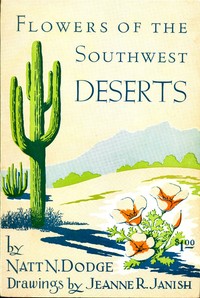
Flowers of the Southwest Deserts Book Summary
Introduction
Flowers of the Southwest Deserts is a unique ethnobotanical field guide and historical document compiled by Olive Thorne Roberts during the Works Progress Administration (WPA) era. Originally published in 1941, this book captures the rich plant life and the traditional uses of these plants by Native American tribes in the arid landscapes of the American Southwest.
What is this book about?
The book serves as both a field guide and a historical record. Roberts meticulously documented the native flowering plants of the desert regions, including precise drawings often accompanied by her own observations and notes. Its core focus is on the ethnobotanical significance—how various Native American tribes identified, used, and understood these plants. Each entry details the plant's scientific name, common name, physical description, geographic distribution, and crucially, the traditional uses of the plant's flowers, leaves, roots, or other parts for medicine, food, ceremonies, and daily life. It's a snapshot of indigenous knowledge recorded during a specific period in the early 20th century.
Key Lessons
The Living Library of Indigenous Knowledge: Roberts' work demonstrates the deep, intergenerational understanding of plant properties held by Native American communities. For example, she details how the Yavapai used the root of the Indian paintbrush (Castilleja spp.) not just for its vibrant color, but for medicinal purposes to treat ailments like colic or snakebites. This wasn't just identification, but understanding the plant's specific role within their ecosystem and culture, passed down through generations.
Ecological Wisdom in Adversity: The harsh desert environment necessitated a profound understanding of which plants were toxic, which were nutritious, which were medicinal, and which were sacred. This knowledge wasn't accidental but was actively learned and applied for survival and well-being. Roberts' book captures this invaluable ecological and survival wisdom that existed long before modern scientific botany fully cataloged these species.
Historical Context and Documentation: Compiled during the WPA, a New Deal program aimed at employing writers, artists, and researchers during the Great Depression, the book reflects a specific historical moment. It offers a valuable record of plant distribution and traditional knowledge before significant environmental changes, development, or cultural shifts that might have occurred later. It serves as a historical benchmark for ecological and cultural studies.
Integration of Art, Science, and Culture: Roberts' illustrations are not just scientific renderings; they often carry cultural weight, showing the flowers in their native habitat or highlighting the plant's distinctive features that might have led to its common name or its cultural significance. The book bridges the gap between scientific observation and cultural understanding.
Is this book fit for me?
This book is particularly suitable if:
- You are interested in the natural history and ecology of the American Southwest.
- You are curious about ethnobotany, the relationship between people and plants.
- You enjoy historical field guides with illustrations.
- You appreciate Indigenous perspectives and traditional knowledge systems.
- You are a student or enthusiast of botany, anthropology, or American environmental history.
- You are looking for practical information on identifying desert wildflowers.
Note that it is a product of its time (1941), so scientific accuracy might not match modern standards, but its cultural and historical value remains significant.
Does it still matter today?
Yes, it absolutely still matters today. "Flowers of the Southwest Deserts" remains relevant for several reasons:
Ecological Memory: It provides a historical baseline for understanding changes in plant distribution, abundance, and phenology in the Southwest, which is crucial in the face of climate change and habitat alteration. Comparing past observations with current conditions can reveal ecological shifts.
Preserving Traditional Knowledge: The recorded ethnobotanical information represents a vital piece of cultural heritage that might otherwise be lost. It offers insights into sustainable land management practices and the historical use of native plants, which can be relevant for modern herbalism, conservation, and cultural preservation efforts.
Reconnecting with Nature: For anyone interested in the natural world of the Southwest, the book offers a unique glimpse into the region's wildflowers and the wisdom of its original inhabitants. It fosters appreciation for the intricate connections between plants, people, and place.
Why read another book next? Given its focus on historical ethnobotany and the specific context of the WPA, a natural next step would be to read "Cacti of the American West" by James D. Noll. This book provides updated information on cacti, which are iconic desert plants, expands geographically, and often incorporates more recent research and interpretations of traditional uses.
| Reading on Gutenburg | Free reading |
| Get Paperback Version on Amazon | Buy a book |
| Suggest Book : Cacti of the American West Book | Get on Amazon |
Conclusion
Olive Thorne Roberts' "Flowers of the Southwest Deserts" is a valuable artifact offering a unique blend of historical botany, detailed illustration, and recorded ethnobotanical knowledge. While perhaps lacking the modern scientific rigor of contemporary field guides, its enduring value lies in its role as a historical document capturing a specific moment in understanding the desert's flora and the cultural practices surrounding it. It serves as a bridge connecting past indigenous knowledge with present ecological and cultural interests, reminding us of the deep history embedded within these resilient desert landscapes.