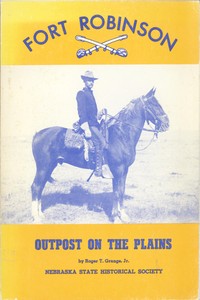
Fort Robinson: Outpost on the Plains Book Summary
Introduction
"Fort Robinson: Outpost on the Plains" offers a riveting journey into the heart of the American frontier during the late 19th century. Authored by a historian, this book meticulously recounts the experiences of settlers, soldiers, and the diverse Native American tribes who inhabited the Nebraska region around Fort Robinson. Through detailed accounts and historical analysis, the book paints a vivid picture of life on the plains, the challenges faced by different groups, and the complex interplay of expansion, conflict, and cultural exchange during a transformative period in American history.
What is this book about?
The book centers on Fort Robinson, a significant military outpost established in Nebraska during the post-Civil War era. It explores the daily life within the fort, the broader agricultural and settlement activities in the surrounding Sand Hills area, and the complex relationship between the United States government, the military stationed at the fort, settlers moving west, and the Native American tribes, particularly the Lakota Sioux, who were forcibly relocated to the area due to government policies like the Dawes Act. It delves into themes of westward expansion, the impact of federal policies on indigenous peoples, the harsh realities of frontier life, and the evolving role of the military in the settlement of the American West. The narrative often highlights the tensions and interactions between these disparate groups, providing a multifaceted view of this crucial historical period.
Key Lessons
One central lesson concerns the profound clash of cultures and values that characterized the American frontier. The book vividly illustrates the collision between the traditional ways of Native American tribes, who viewed the land as interconnected and sacred, and the Euro-American settlers and government policies focused on individual land ownership, resource extraction, and westward expansion. This is exemplified by the experiences of the Lakota Sioux confined to the reservation system, their resistance, and the often brutal government response. The narrative forces readers to consider the human cost and differing perspectives inherent in forced assimilation and land dispossession.
Another significant theme is the complex and often contradictory role of the U.S. Army at frontier outposts like Fort Robinson. While ostensibly tasked with protecting settlers and enforcing federal law, soldiers were also agents of policy, sometimes mediating conflicts but often primarily enforcing removal and confinement. This duality highlights the limitations and moral ambiguities of power structures attempting to manage a volatile frontier environment. The book doesn't shy away from depicting instances where the military's actions exacerbated tensions rather than solely pacifying the region.
Furthermore, the book underscores the harsh realities and resourcefulness required for survival in the plains environment. It details the challenges of agriculture in the semi-arid Sand Hills, the unpredictable weather, the threat of disease, and the constant presence of wildlife and the occasional hostile encounter. Through the experiences of settlers, soldiers, and even some Native Americans adapting to the harsh conditions, the book emphasizes how the natural environment shaped human decisions, livelihoods, and conflicts on the frontier.
Is this book fit for me?
This book is highly recommended if you are interested in American history, particularly the 19th-century Western frontier, the experiences of Native Americans during that period, the history of the U.S. military's role in westward expansion, or the development of the Great Plains region. It is suitable for history students, enthusiasts, and anyone seeking a deeper understanding of the complex social, cultural, and political dynamics that shaped modern America during its expansion phase. Readers who enjoy detailed historical narratives, exploration of primary sources, and analysis of human interactions in challenging environments will find this book particularly engaging.
Does it still matter today?
Absolutely. The themes explored in "Fort Robinson: Outpost on the Plains" continue to resonate today. The issues of land rights, forced displacement of indigenous peoples, government policy implementation, cultural conflict, and environmental adaptation remain relevant. Understanding the historical context of westward expansion helps us comprehend ongoing debates about federal authority versus states' rights, the relationship between the U.S. government and Native American tribes, land use policies, and the environmental impact of human settlement and resource exploitation. The book provides crucial context for these contemporary discussions by illustrating their deep historical roots.
Therefore, the book remains highly relevant. To further explore these enduring themes, especially the ongoing relationship between the U.S. government and Native American tribes, I suggest reading "The Broken Rope: A Life in the Law of the Crow Nation" by Raymond J. DeMallie.
| Reading on Gutenburg | Free reading |
| Get Paperback Version on Amazon | Buy a book |
| Suggest Book : The Broken Rope: A Life in the Law of the Crow Nation Book | Get on Amazon |
Conclusion
"Fort Robinson: Outpost on the Plains" serves as a valuable historical resource, offering detailed insights into a specific but significant slice of American history. It provides a nuanced understanding of the frontier experience, the complex interactions between settlers, soldiers, and Native Americans, and the lasting impacts of policies enacted during the period of westward expansion. The lessons about cultural conflict, the ambiguities of power, and the challenges of adaptation in a new environment are timeless, making this book not just a historical account but a relevant exploration of enduring human themes. It is a worthy read for anyone seeking to understand the past's influence on the present. Tags : History - American History - Warfare