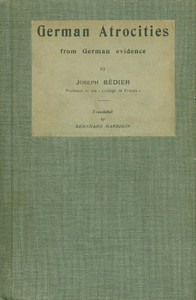
German Atrocities from German Evidence Book Summary
Introduction
Published in 1929, 'German Atrocities from German Evidence' stands as a meticulously researched historical account. The author compiles and presents officially documented evidence, primarily sourced from German military records, telegrams, and reports, to substantiate claims of atrocities committed by the German Empire during the early stages of World War I, specifically concerning Belgian civilians.
What is this book about?
The book's central thesis revolves around the systematic documentation of German war crimes. It details numerous incidents, such as the widespread killing of hostages, the brutal suppression of resistance in neutral Belgium, the destruction of towns and railways, and the systematic rape and mistreatment of Belgian civilians by German soldiers. The author's unique approach is to quote directly from German government communications, military orders, and reports, effectively using the perpetrators' own words and documents to build a case against them, thereby providing undeniable proof according to the author's argument.
Key Lessons
The book offers profound insights into the nature of conflict and evidence. One crucial lesson is the power and significance of primary sources. By relying on German official documents, the author demonstrates that truth can be uncovered even from the archives of the accused, forcing a confrontation with uncomfortable realities often obscured by propaganda. For example, telegrams detailing specific orders for massacres and the systematic plundering of Belgian towns serve as undeniable proof, bypassing the need for potentially biased external accounts.
Another key takeaway is the stark contrast between official pronouncements and brutal reality. The book meticulously highlights how German propaganda often downplayed or denied these atrocities, while the documented evidence paints a grim picture of military conduct. This reveals the inherent difficulty of maintaining ethical standards during war and the mechanisms by which states can rationalize extreme violence. Furthermore, the book serves as an early example of using documented evidence to counter enemy propaganda, setting a precedent for future historical analyses of conflict.
Finally, it underscores the long-term consequences of such actions. Documenting these atrocities wasn't just an academic exercise; it was a moral imperative and a political tool, intended to hold the German government accountable and influence international opinion. The book shows how detailed documentation can be used to challenge narratives, preserve historical memory, and potentially contribute to future peace efforts.
Is this book fit for me?
If you are interested in World War I history, particularly the Western Front and the conduct of the German Empire; the ethics of war and military conduct; historical research methods and the use of primary sources; propaganda in conflicts; or the documentation of human rights abuses, this book is highly relevant. It is also valuable for readers interested in the origins of modern international law and humanitarianism, as it represents an early, systematic attempt to document war crimes. Additionally, it provides context for understanding the complex dynamics of international relations in the 20th century.
Does it still matter today?
Absolutely. The core issues explored in 'German Atrocities from German Evidence'—the systematic commission of war crimes, the use of propaganda to deny or minimize atrocities, the importance of documenting evidence, and the long-term impact of such actions—remain profoundly relevant. We continue to witness similar patterns in modern conflicts, where evidence of civilian casualties and war crimes is documented (sometimes by the perpetrators themselves or international observers) but often goes unaddressed or is subject to debate and denial. The book's method of using primary sources to build an undeniable case against actions taken during wartime serves as a timeless reminder of the importance of accountability.
Therefore, it is highly relevant and I would suggest reading Propaganda and Reality next. This book delves into how information is controlled and manipulated in modern conflicts and political environments, directly connecting the historical propaganda techniques explored here to contemporary challenges in media consumption and understanding global events.
| Reading on Gutenburg | Free reading |
| Get Paperback Version on Amazon | Buy a book |
| Suggest Book : Propaganda and Reality Book | Get on Amazon |
Conclusion
'German Atrocities from German Evidence' is a foundational text in the historical documentation of World War I. Its rigorous use of primary German sources provides a powerful and undeniable narrative of the brutal treatment of Belgian civilians. While written in a specific historical context, its exploration of war crimes, propaganda, evidence gathering, and accountability remains strikingly pertinent. The book serves as both a historical document and a moral inquiry, reminding us of the importance of truth-telling and the enduring human struggle against injustice, even in the darkest moments of conflict.