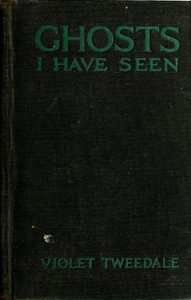
Ghosts I Have Seen, and Other Psychic Experiences Book Summary
Introduction
Welcome to a journey into the world of paranormal experiences documented a century ago. This summary explores 'Ghosts I Have Seen, and Other Psychic Experiences,' a unique collection offering a glimpse into the methods and claims of spirit communication during the peak of Spiritualism's popularity. We'll delve into its content, analyze its key themes, and consider its relevance for contemporary readers.
What is this book about?
Published in the early 1900s, 'Ghosts I Have Seen, and Other Psychic Experiences' represents a collection of accounts purportedly detailing genuine encounters with the spirit world. The book documents author's (or narrator's) participation in séances, their claimed communications with the deceased, and various other psychic phenomena observed over time. It falls within the category of personal testimonies or Spiritualist literature, reflecting a period when belief in spirit communication was widespread and contemporary with the rise of Spiritualism as a cultural and religious movement. The text aims to present these experiences as evidence of an afterlife and psychic abilities, though it acknowledges the inherent challenges and debates surrounding such claims.
Key Lessons
This book offers a fascinating, albeit subjective, look at the intersection of belief and the paranormal during a specific historical period. While not offering scientific proof, it teaches us several things:
First, it highlights the powerful human need to connect with the deceased and understand what happens after death. The detailed descriptions of séances and the emotional weight placed on these experiences underscore how such beliefs can provide comfort, meaning, and a sense of continuity. For example, accounts often focus on receiving messages from loved ones, reinforcing the idea that communication across the veil is possible and meaningful.
Second, the book implicitly raises questions about evidence and verification. While the author presents the séance results as fact, the nature of psychic claims often makes objective proof difficult. This invites readers to consider the difference between subjective experience and objective reality, and the role of personal conviction versus empirical evidence in matters beyond the physical senses.
Third, it serves as a historical snapshot. It captures the cultural atmosphere where Spiritualism was a mainstream phenomenon, influencing art, literature, and even politics. Understanding this context helps appreciate the societal shifts and the reasons why belief in ghosts and spirits was so prevalent at that time. The book's lessons lie in its documentation of faith, its exploration of the unknown, and its reflection of a unique period in human history grappling with mortality and the supernatural.
Is this book fit for me?
This book might be particularly suitable if you have a keen interest in:
1. History and Cultural Studies: You enjoy exploring the beliefs, practices, and social movements of the 19th and early 20th centuries, especially the rise and decline of Spiritualism.
2. Paranormal and Supernatural Phenomena: You are curious about ghostly encounters and psychic abilities, even if you remain skeptical, and want to see how these were presented and believed in the past.
3. Early 20th-Century Literature and Writing Styles: You appreciate works that document personal experiences and are interested in the narrative techniques used to convey subjective, unverifiable events.
It may be less suitable if you are looking for:
- Scientific Proof of ghosts or psychic abilities.
- Contemporary takes on the paranormal (this book is an historical artifact).
- Fast-paced thriller or fictional accounts of hauntings.
Does it still matter today?
Yes, the book still holds value today, primarily as a historical document and a piece of cultural analysis. It provides valuable insight into:
- The History of Belief Systems: It shows how widespread beliefs in the supernatural can be, even when challenged by science and reason. Understanding past beliefs helps contextualize the persistence of similar ideas in modern self-help, wellness, or fringe science movements.
- The Intersection of Science and Spirituality: It reflects the ongoing, often contentious, dialogue between empirical evidence and personal or spiritual beliefs. This theme remains highly relevant in discussions about consciousness, near-death experiences, and alternative medicine.
- Understanding Human Psychology: The motivations behind seeking contact with the dead (grief, fear of death, desire for meaning) are timeless human concerns that continue to drive interest in mediums, ghost hunting, and bereavement counseling.
While the specific claims of spirit communication are now viewed with significant scientific skepticism, the book remains important for understanding the cultural landscape of its time and the enduring human fascination with the unknown and the possibility of life after death.
| Reading on Gutenburg | Free reading |
| Get Paperback Version on Amazon | Buy a book |
| Suggest Book : The Demon-Haunted World: Science as a Candle in the Dark Book | Get on Amazon |
Conclusion
'Ghosts I Have Seen, and Other Psychic Experiences' offers a unique, albeit dated, perspective on the world of spirit communication. It serves primarily as a historical artifact, capturing the earnest belief and cultural context of Spiritualism a century ago. While it doesn't provide conclusive proof of ghosts, it effectively documents the power of these beliefs and the societal milieu that fostered them. Its value lies in its historical significance and its ability to prompt reflection on evidence, faith, and humanity's perennial quest to understand existence beyond the physical realm. For those seeking a modern exploration of skepticism versus the paranormal, Carl Sagan's 'The Demon-Haunted World' provides a strong, evidence-based counterpoint.