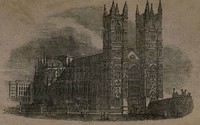
Historical Description of Westminster Abbey, Its Monuments and Curiosities Book Summary
A Journey Through Time and Stone
Step inside the hallowed walls of Westminster Abbey, a place where centuries of history, power, and faith converge. This summary explores William Harrison's 'Historical Description of Westminster Abbey, Its Monuments and Curiosities,' a detailed account written in the 19th century that serves as a valuable historical document and guide to one of England's most iconic landmarks. While not a narrative story, it provides a comprehensive look at the Abbey's architecture, its rich tapestry of monuments, and the fascinating stories embedded within its stones.
A Detailed Survey of a National Treasure
Published in 1859, this book by William Harrison is essentially a meticulous historical and descriptive guide to Westminster Abbey. It delves into the Abbey's physical structure, its architectural evolution over the centuries, and the numerous tombs, effigies, monuments, and inscriptions that fill its space. The book meticulously documents the lives and achievements of the individuals buried or commemorated within its precincts, from royalty and statesmen to scientists and artists. It aims to inform the reader about the Abbey's significance as a religious house, a royal mausoleum, and a symbol of national identity, providing details on its various curiosities and historical importance.
Key Insights from 'Historical Description'
While not offering modern 'life lessons' per se, this book provides several key insights into history, architecture, and national symbolism:
1. The Enduring Significance of Monuments: The book demonstrates how physical structures like monuments and effigies serve as tangible links to the past. It explains the symbolism behind different architectural styles used in memorials (e.g., the Gothic style for elaborate tombs, classical for imperial figures) and how they convey status, piety, and historical narrative. For example, it details the grand tomb of Henry VII, illustrating the Tudor dynasty's ambitions and the artistry of the period.
2. History as a National Narrative: By focusing on the lives of prominent figures buried at Westminster, the book shows how national history is often preserved and commemorated through specific places. It reveals the Abbey as a repository of collective memory, where coronations, royal weddings, and funerals reinforce the continuity and mythology of the British monarchy and nation. Understanding the Abbey's occupants helps piece together the story of England's political and cultural development.
3. The Intersection of Power and Piety: Harrison's descriptions highlight the close relationship between the English monarchy and the Anglican Church, with the Abbey serving as the primary site for coronations and royal interments. The book illustrates how religious ceremonies and architectural grandeur were used to legitimize royal power and reinforce divine sanction for the monarchy. The elaborate funerary monuments of kings and queens are prime examples of this interplay.
4. Appreciating Historical Detail and Curiosity: The book instills an appreciation for the 'how' and 'why' behind historical details. It teaches readers to look beyond the surface and recognize the craftsmanship, historical context, and often hidden stories behind everyday objects, architectural features, and even seemingly minor inscriptions within the Abbey. This fosters a deeper engagement with historical sites.
Who Should Read This Book?
This book is particularly suitable for:
- History enthusiasts, especially those interested in British, medieval, and early modern history.
- Students of architecture and art history looking for detailed examples of Gothic and later styles within a specific building.
- Visitors planning a trip to Westminster Abbey who want a pre-visit guide to understand what they are seeing.
- Those researching genealogy or the history of specific families buried or commemorated at the Abbey.
- Anyone seeking a detailed, albeit dated, reference work on a significant piece of national heritage.
While written in the 19th century, its focus on facts, figures, and descriptions makes it a valuable resource for historical context.
Relevance in the Modern Era?
Yes, this book still matters today, primarily as a historical document and a source of information:
1. Understanding Historical Context: It provides invaluable primary-source-like detail about the Abbey's history, the individuals buried there, and its architectural development up to the 19th century. This information is crucial for historians, researchers, and anyone seeking a deep understanding of British history.
2. Preserving Memory: While modern guides and websites exist, Harrison's work captures a specific snapshot of the Abbey's state and presentation during the Victorian era. It helps preserve the memory of how the Abbey was perceived and experienced in the past.
3. Appreciation of Heritage: Reading about the Abbey's monuments and curiosities, as described by Harrison, enhances the visitor's experience. It provides background that enriches the appreciation of the same sites seen today.
However, the book lacks modern research, photography, and contextual analysis. Its descriptions are detailed but lack the critical perspective or broader cultural analysis that contemporary studies might offer.
| Reading on Gutenburg | Free reading |
| Get Paperback Version on Amazon | Buy a book |
| Suggest Book : The Abbey: An Illustrated History Book | Get on Amazon |
A Valuable Historical Guide
In conclusion, William Harrison's 'Historical Description of Westminster Abbey' remains a significant piece of Victorian scholarship and a comprehensive guide to its history and monuments. While perhaps superseded by more modern works for the latest developments and critical analysis, it provides a wealth of detail and context for anyone interested in the Abbey's rich past. It serves as a testament to the enduring legacy of Westminster Abbey and the importance of preserving and understanding our historical heritage.