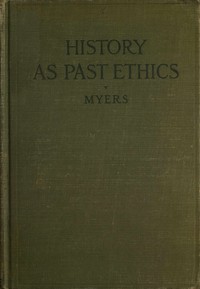
History as past ethics; an introduction to the history of morals Book Summary
Welcome to History as Past Ethics
Dive into a profound exploration of history not just as events, but as a moral biography. This book, by Gregory Vlastos, challenges the conventional view of history and invites you to understand how the ethical landscape has shifted over centuries, shaping our present and influencing our future. It's a journey through time, examining the moral codes, beliefs, and values that defined past societies.
Book Overview
"History as Past Ethics" argues that history is fundamentally about understanding the ethical frameworks that governed people in the past. Vlastos explores how moral concepts evolved from ancient times through the Middle Ages and into the modern era. He analyzes how historical figures' actions and societal structures reflected their contemporary ethical understandings, often leading to significant shifts in moral philosophy. The book moves beyond recounting events to interpreting the underlying ethical assumptions that shaped historical developments.
Key Insights from History as Past Ethics
One central idea is that ethical change is a gradual process, often subtle and deeply intertwined with historical context. For example, concepts like 'justice,' 'duty,' and 'human rights' have undergone radical transformations. What was considered a moral virtue in ancient Greece might be viewed quite differently in the Enlightenment. Vlastos suggests that understanding these shifts helps us appreciate the contingency of our own values.
Another lesson is the importance of empathy when studying history. To grasp why people made certain ethical choices in the past, we need to understand their worldview, biases, and the constraints they faced. This doesn't excuse past actions but fosters a deeper, more nuanced understanding. Vlastos argues against simplistic moral judgments on history, advocating instead for contextual interpretation.
Furthermore, the book highlights how history itself becomes a tool for constructing identity and justifying claims. Societies reinterpret their past through an evolving lens of morality, often to reinforce current values or legitimize changes. Recognizing this can make us more critical consumers of historical narratives, aware of how the past is selectively remembered or emphasized.
Ultimately, Vlastos posits that engaging with history as ethics helps us define our own moral compass. By understanding the ethical currents that shaped the world, we can better navigate contemporary moral dilemmas and appreciate the complexity of both historical and modern ethical landscapes.
Is This Book Fit For You?
This book is ideal if you are interested in:
- The intersection of history and ethics, or philosophical questions about morality's development.
- Understanding how major historical periods (Ancient, Medieval, Modern) influenced ethical thinking.
- Critical analysis of historical figures and events through a moral lens.
- Exploring how our contemporary values evolved from past beliefs.
- Engaging in thoughtful reflection on the nature of ethical change over time.
It requires a willingness to think comparatively and contextually about moral concepts. While rigorous, it's written in an accessible style suitable for readers with some interest in philosophy and history.
Does It Still Matter Today?
Absolutely. In our increasingly complex and interconnected world, understanding the historical roots of our ethical dilemmas is more crucial than ever. Questions about human rights, justice, equality, and social responsibility have deep historical antecedents. By tracing these roots, we can better:
- Understand the origins and persistence of contemporary conflicts.
- Critically evaluate current ethical debates by placing them within a broader historical context.
- Recognize that many modern ethical concerns are continuations or transformations of older ones.
- Develop a more informed and less parochial perspective on global issues.
It helps us move beyond presentism and fosters a richer understanding of the moral challenges we face.
| Reading on Gutenburg | Free reading |
| Get Paperback Version on Amazon | Buy a book |
| Suggest Book : The Family: A World History Book | Get on Amazon |
Conclusion
"History as Past Ethics" by Gregory Vlastos offers a compelling and intellectually rewarding perspective on how history is more than just a record of the past; it's a profound exploration of the ethical currents that have shaped humanity. By moving beyond simple narratives of events, it encourages us to delve into the moral consciousness of different eras. This understanding, Vlastos argues, is invaluable for navigating our own complex and evolving ethical landscape. It provides a deeper appreciation for where we've come from and, consequently, a more informed way to consider where we are heading.