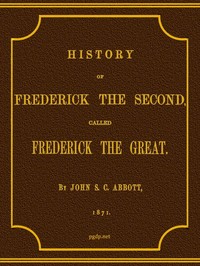
History of Frederick the Second, Called Frederick the Great. Book Summary
Introduction
Thomas Carlyle's "History of Frederick the Second, Called Frederick the Great" is a seminal, albeit challenging, work of 19th-century historiography. Published in 1840, it offers a detailed and often critical examination of the life and reign of Frederick II, the King of Prussia who reigned from 1740 to 1786. Carlyle, a prominent British philosopher and historian, presents Frederick not merely as a military leader, but as a complex, often enigmatic figure embodying Enlightenment ideals, absolutist power, and the complexities of leadership in a turbulent 18th-century Europe. The book is known for its vivid character sketches, philosophical depth, and powerful prose, but its dense style and occasional bias require careful reading and context.
What is this book about?
The book chronicles the life of Frederick II from his childhood in a minor German duchy, his ascension to the throne of Prussia, through his major military campaigns (including the War of the Austrian Succession and the Seven Years' War), his administrative and cultural reforms, and his personal beliefs and lifestyle. Carlyle delves into Frederick's strategic thinking, his rejection of traditional pomp and ceremony, his patronage of the arts and sciences (particularly music and architecture, exemplified by Sanssouci), his policy of religious tolerance, and his ultimately disappointing personal and political legacy. It is less a straightforward chronological account and more a series of sketches and analyses of Frederick's character, actions, and the historical forces he navigated.
Key Lessons
One central lesson from Carlyle's portrayal is the complex interplay between individual genius and historical circumstance. Frederick is presented as a brilliant, pragmatic, and often ruthless ruler, capable of extraordinary feats of military and administrative innovation. His famous maxim, 'One must be crazy to be king,' underscores his belief in absolute necessity and unconventional thinking. However, Carlyle also subtly suggests that even the most capable ruler is constrained by the limitations of their time and the actions of others. Frederick's attempts to modernize Prussia were remarkable, but they also set the stage for future conflicts.
Another key takeaway concerns the nature of leadership and power. Carlyle presents Frederick as an absolute monarch who centralized power and ruled by decree, yet he also highlights Frederick's intellectual curiosity, scientific interests, and relative openness compared to some other contemporary rulers. This duality challenges simplistic views of absolutism. The book implicitly asks: What defines a 'great' ruler? Is it military prowess, administrative efficiency, cultural patronage, or enduring peace? Frederick's mixed record forces readers to grapple with these questions.
Furthermore, Carlyle's work emphasizes the importance of character and the burden of power. He meticulously details Frederick's private letters and conversations, revealing a side-by-side with his public persona. The king's intense focus, drive, and occasional cruelty are laid bare. This humanizes Frederick and serves as a cautionary tale about the potential costs of unchecked power and the psychological toll it can take on even the most capable individuals. His intellectual detachment, while enabling effectiveness, also created personal isolation.
Is this book fit for me?
This book is ideal for readers interested in: 1) European history, particularly the 18th century and the rise of Prussia; 2) Military history and strategy, especially the Seven Years' War; 3) Political philosophy and the nature of power and leadership; 4) Classic literature and engaging, albeit dense, prose; 5) The life of a controversial historical figure like Frederick the Great. It is less suitable for readers seeking a light, easily digestible summary or those primarily interested in social history beyond the political/military sphere. Patience for a philosophical and sometimes digressive style is essential.
Does it still matter today?
Yes, this book remains relevant. Frederick the Great's story touches upon enduring themes: the pursuit of national power and security in a competitive international system, the tension between progress and tradition, the ethics and practicalities of leadership, the role of religion in politics, and the impact of war. His methods of statecraft, military innovations (like the use of skirmishers and artillery), and administrative reforms continue to be studied. Carlyle's exploration of the individual against history, the psychology of power, and the challenge of defining greatness are timeless questions. Understanding this pivotal figure in the formation of the modern German state provides crucial context for European history.
| Reading on Gutenburg | Free reading |
| Get Paperback Version on Amazon | Buy a book |
| Suggest Book : The Prince Book | Get on Amazon |
Conclusion
Thomas Carlyle's monumental "History of Frederick the Second" offers a profound, if demanding, portrait of one of Europe's most significant 18th-century rulers. It goes beyond a simple biography to explore the complexities of power, leadership, and historical change. While its Victorian prose and perspective might seem dated, its insights into Frederick's character, his achievements, and his contradictions continue to resonate. For anyone seeking a deep dive into the life of 'The Great' King or the turbulent era he navigated, Carlyle's work remains a foundational, albeit challenging, text. It provides a powerful lens through which to view the exercise of power and the enduring quest for national greatness.