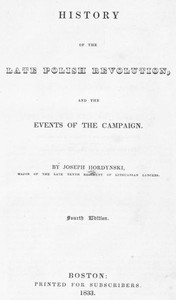
History of the Late Polish Revolution and the Events of the Campaign Book Summary
Key Insights and Lessons from the Polish Revolution of 1863-1864
The book highlights several crucial lessons drawn from the tragic failure of the January Uprising:
1. The Limits of External Intervention in Internal Affairs: Napoleon III's ambitious plan to aid Poland was heavily criticized in France and viewed suspiciously by Russia and Austria. His intervention, though planned, was fraught with logistical problems, lack of popular support even within France, and ultimately, a failure to materialize effectively. This underscores the immense difficulties and risks of major powers intervening in the internal struggles of other nations, often exacerbating rather than resolving underlying issues. The intervention's failure demonstrates how external aid, however well-intentioned, can be undermined by international diplomacy, domestic politics, and unforeseen complications.
2. The Importance of Unity and Accurate Intelligence: The Polish uprising was ultimately suppressed by the overwhelming might of the Russian Empire. A key lesson is the critical need for internal unity among the Poles. Internal divisions weakened the revolutionary cause significantly. Furthermore, the failure to gather accurate intelligence about Russian troop movements and capabilities allowed Russia to respond effectively and crush the rebellion. This teaches that military success, even with popular support, requires strategic planning, accurate information, and unity of purpose.
3. The Pivotal Role of Major Powers: The fate of the Polish uprising was heavily influenced by the actions and calculations of the great powers of Europe—Russia, France, Austria, and Prussia. Russia's determination to crush the revolt was absolute. Napoleon III's vacillations and France's internal divisions prevented decisive aid. Austria and Prussia maintained neutrality out of self-interest. This emphasizes how the outcome of national struggles in the 19th century was often determined less by the actions of the struggling nation itself and more by the geopolitical interests and interventions of the larger, established powers.
These lessons provide a sobering perspective on the challenges faced by nations or movements seeking independence or significant political change in a world dominated by powerful empires.
Is This Book Fit for You?
If you are interested in:
- European history, particularly the 19th century
- The history of Poland and its struggles for independence
- The role of major powers (Russia, France, Austria, Prussia) in European affairs
- The causes and consequences of the 1863-1864 January Uprising
- Military history and tactics of the mid-19th century
- Understanding the complexities of revolutionary movements
* Historical Context for Contemporary Issues: Understanding the 19th-century dynamics between Russia and its neighbors, and the struggles for Polish sovereignty, provides valuable context for ongoing tensions between major powers and smaller nations in Eastern Europe. It helps explain the historical roots of certain geopolitical alignments and rivalries.
* Relevance of Great Power Politics: The book vividly illustrates how the actions of superpowers can dramatically impact the fate of smaller nations. This remains highly relevant in an era still marked by great power competition and intervention.
* Lessons on Revolution and Intervention: The failure of the uprising, exacerbated by foreign intervention (or lack thereof), offers enduring insights into the challenges of achieving political change through revolution, the difficulties of gaining external support, and the critical importance of unity and accurate intelligence. These are timeless themes in international relations and political history.
Given its focus on historical events, a direct "does it matter today" in a contemporary sense is limited. However, its exploration of fundamental historical forces and human endeavors retains significant educational and analytical value.
| Reading on Gutenburg | Free reading |
| Get Paperback Version on Amazon | Buy a book |
| Suggest Book : A History of the Art of War in the Nineteenth Century by J.F.C. Fuller Book | Get on Amazon |
Conclusion
"History of the Late Polish Revolution and the Events of the Campaign" offers a detailed account of a significant, though ultimately unsuccessful, struggle for Polish independence during a turbulent period in European history. By examining the uprising, Napoleon III's intervention, and the role of Russia and other powers, the book provides valuable insights into 19th-century European politics, the conduct of war, the challenges of revolutionary change, and the enduring influence of great powers. While perhaps niche for the general reader today, it remains a crucial source for historians and anyone seeking to understand the complex interplay of national aspirations and imperial interests that shaped modern Europe.