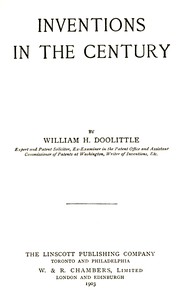
Inventions in the Century Book Summary
One of the most striking lessons from Inventions in the Century is the interconnectedness of technological progress. Seeley demonstrates how one invention often paved the way for others, creating a ripple effect of innovation. For example, the improvements in iron production, driven by the demand for steam engines and railways, were crucial for building stronger bridges and more efficient machinery. This wasn't a series of isolated breakthroughs, but a complex system where advancements in one area fueled progress in many others. It highlights that innovation rarely happens in a vacuum; it builds upon existing knowledge and creates new opportunities.
The book also powerfully illustrates the disruptive nature of invention. While these advancements brought about unprecedented wealth and convenience, they also caused significant social upheaval. The power loom, for instance, dramatically increased textile production but also led to the displacement of handloom weavers, creating poverty and unrest. Similarly, the railway, while revolutionizing transportation, also disrupted traditional industries and altered land use patterns. Seeley doesn’t shy away from acknowledging these negative consequences, reminding us that progress isn’t always linear or universally beneficial. He emphasizes the importance of considering the broader societal impact of new technologies.
Furthermore, Seeley emphasizes the role of practical application and commercialization in driving innovation. He points out that many inventions existed in theory for years, even centuries, before they were successfully implemented and scaled up. The key wasn't just the initial idea, but the ability to refine it, make it cost-effective, and find a market for it. The steam engine, for example, underwent numerous iterations before becoming a reliable and powerful source of energy. This underscores the importance of entrepreneurship and investment in translating scientific discoveries into tangible benefits for society. It's a reminder that a brilliant invention is only useful if it can be brought to life and made accessible.
Finally, the book subtly reveals the importance of government policy and infrastructure in fostering innovation. The development of the railway system in Britain, for example, was heavily influenced by government regulation and investment in land acquisition. Similarly, the establishment of patent laws provided inventors with incentives to protect their ideas and profit from their creations. Seeley shows that a supportive legal and economic environment is essential for encouraging technological progress. It's a lesson that remains relevant today as governments grapple with how to regulate and promote emerging technologies.
- You're interested in the history of technology and the Industrial Revolution.
- You enjoy reading about the social and economic consequences of innovation.
- You appreciate a thoughtful and nuanced analysis of historical events.
- You're fascinated by the 19th century and the forces that shaped the modern world.
- You like a writing style that is more analytical essay than a simple recounting of facts.
| Reading on Gutenburg | Free reading |
| Get Paperback Version on Amazon | Buy a book |
| Suggest Book : The Second Machine Age Book | Get on Amazon |