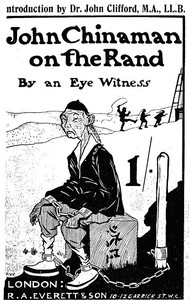
John Chinaman on the Rand Book Summary
Introduction
John Chinaman on the Rand is a historical novel by Roy M. Howard, published in 1968, that delves into the experiences of Chinese laborers who migrated to South Africa during the late 19th and early 20th centuries, particularly during the gold rush era on the Rand. The book offers a poignant portrayal of their struggles, resilience, and cultural identity amidst the backdrop of colonialism, racism, and economic exploitation. It serves as an important literary work that sheds light on a significant yet often overlooked chapter in the history of both South Africa and global migration.
What is this book about?
The novel centers on the life of Ah Fook, a Chinese laborer who journeys to the Rand to seek work during the gold rush. It explores his journey from China, his arrival in South Africa, his laborious work conditions, the pervasive racism he faces, his efforts to maintain his cultural identity and community, and his eventual fate. The book provides a detailed and empathetic account of the indentured labor system, the brutal working conditions on the mines, the social dynamics among different migrant groups, and the systemic injustices imposed by the colonial authorities. It's a story of survival, dignity, and the human spirit striving against overwhelming adversity.
Key Lessons
The book offers several profound lessons about resilience, identity, and the enduring impact of colonialism.
Firstly, it powerfully illustrates the resilience of the human spirit in the face of unimaginable hardship. Characters like Ah Fook endure brutal working conditions, systemic racism, poverty, and loss, yet they continue to persevere. The novel demonstrates how individuals can maintain hope and dignity when stripped of everything else. For instance, Ah Fook's quiet determination and his focus on providing for his family become symbols of survival against the backdrop of dehumanizing exploitation.
Secondly, the book underscores the importance of cultural identity and community as sources of strength. In a foreign land where they are constantly reminded of their Otherness, the Chinese laborers find solace and belonging within their own community structures and cultural practices. Their shared language, customs, and mutual aid societies provide crucial support systems, highlighting how maintaining a connection to one's heritage is vital for psychological and social survival in hostile environments.
Thirdly, "John Chinaman" serves as a stark reminder of the brutal realities of the colonial economy and the exploitation inherent in systems of racialized labor. It exposes how economic greed and racial prejudice intersected to systematically dehumanize and subjugate specific groups. The novel forces readers to confront uncomfortable truths about how power structures are maintained through racism and the commodification of human beings, lessons that resonate powerfully in discussions of modern economic and social inequalities.
Is this book fit for me?
If you are interested in the history of migration, colonialism, or the experiences of marginalized groups under oppressive systems, this book is highly relevant. It is particularly suitable for readers who enjoy historical fiction that offers a deep dive into specific periods and social contexts. You might find it engaging if you appreciate narratives focused on individual resilience against systemic injustice, or if you are looking for a more nuanced understanding of the Chinese diaspora experience. Readers interested in themes of labor exploitation, racial discrimination, or South African history during the late 19th century would also find value in this work.
Does it still matter today?
Yes, absolutely. "John Chinaman on the Rand" remains profoundly relevant today. The themes of racial discrimination, economic exploitation, migration, and the search for dignity in the face of systemic injustice are as pertinent now as they were over half a century ago. The novel's exploration of how racial hierarchies are constructed and maintained through economic systems offers valuable insights into contemporary issues of inequality and power dynamics. It serves as a historical lens through which we can better understand the roots of modern-day racial prejudices and economic disparities, reminding us of the long and often brutal history of labor exploitation based on race.
Given its enduring relevance, a suitable next book would be:
suggest_book
| Reading on Gutenburg | Free reading |
| Get Paperback Version on Amazon | Buy a book |
| Suggest Book : The World Is a Carpet Book | Get on Amazon |
Conclusion
"John Chinaman on the Rand" is a significant piece of historical fiction that provides a powerful and often harrowing account of Chinese laborers' experiences in South Africa's gold mining era. It offers valuable insights into the intersections of race, labor, and colonialism, emphasizing human resilience and the enduring quest for dignity. While the specific historical context is unique, its exploration of universal themes ensures its continued importance for readers concerned with social justice, history, and the human condition. Roy M. Howard's work remains an essential read for understanding this complex period and its lasting legacy.