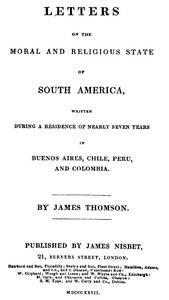
Letters on the Moral and Religious State of South America Written during a residence of nearly seven years in Buenos Aires, Chile, Peru and Colombia Book Summary
Exploring Moral and Religious Themes - The core focus of the letters is the moral and religious conditions prevailing in South America during that period. The author delves into topics such as the influence of European colonization and missionary activity on indigenous populations, the state of organized religion, societal ethics, and the challenges faced by both native populations and settlers.
Historical and Cultural Context - The letters serve as a primary source document, offering observations and commentary on the social, political, and religious dynamics of the time, reflecting the author's British viewpoint and the specific circumstances of mid-19th century South America.
1. The Enduring Impact of Colonialism and Missionary Activity: The author meticulously documents how the legacy of European colonization, particularly through the efforts of missionaries (Catholic, Protestant, and others), profoundly shaped the religious and cultural landscape. He observes the often complex, sometimes violent, process of replacing indigenous beliefs with Christianity, noting the syncretism (blending of beliefs) that occurred in some areas. He highlights the missionary zeal but also critically examines the paternalistic and sometimes exploitative attitudes accompanying these efforts, questioning the true impact on local populations' autonomy and cultural identity.
2. Moral Character of Society and Governance: The letters frequently assess the moral tone of South American society, touching upon issues of morality, ethics, and social conduct. The author comments on both urban centers and rural areas, often expressing concern about perceived laxity, corruption, or the prevalence of certain social vices. He connects these societal morals to the broader context of governance, stability, and the influence of prevailing religious doctrines, suggesting a link between the spiritual and social fabric of the nations he visited.
3. Religious Plurality, Conflict, and Conversion: The author details the religious environment, which was predominantly Roman Catholicism, inherited from the colonial era, but with significant pockets of other faiths (like Protestantism among certain settlers or indigenous groups) and, in some cases, persistent elements of indigenous spirituality. He explores the dynamics between different religious groups, the challenges faced by missionaries in converting populations, and the resistance or accommodation shown by local communities to imposed religious doctrines. He often questions the effectiveness and appropriateness of foreign religious interventions.
4. Indigenous Perspectives and Treatment: A recurring theme is the author's observations on the status and treatment of indigenous peoples. He reflects on the profound cultural and spiritual traditions that existed before European contact, the devastating impact of colonization, and the ongoing struggles for dignity, land, and recognition. He sometimes appears ambivalent, expressing both sympathy for their plight and perhaps reflecting common contemporary biases of his time, but his observations provide valuable documentation of the era's attitudes towards indigenous populations.
- You are interested in 19th-century South American history.
- You want to understand the historical roots of contemporary issues in Latin America.
- You are studying the history of missionary work, colonialism, or cultural exchange.
- You are curious about the moral and religious perspectives of a European observer in a post-colonial context.
- You are researching the social ethics of the mid-19th century.
Yes, Letters on the Moral and Religious State of South America still matters today. The fundamental issues it addresses—such as the legacy of colonialism, the relationship between religion and society, the challenges of cultural identity, and the ethics of conversion and missionary work—continue to resonate in the contemporary Americas and beyond.
While the specific political and social contexts have changed, the underlying dynamics of power, cultural imposition, indigenous rights, and the role of religion in public life remain relevant. The book offers a historical baseline for understanding how these complex issues have evolved over time.
Therefore, if you wish to delve deeper into the subject, a relevant follow-up book could be:
suggest_book
| Reading on Gutenburg | Free reading |
| Get Paperback Version on Amazon | Buy a book |
| Suggest Book : The Missionary Encounter in Latin America Book | Get on Amazon |
In summary, 'Letters on the Moral and Religious State of South America' is a significant primary source document. It provides a contemporary, albeit European and often critical, perspective on the moral and religious climate of a crucial period in South American history. While written from a specific viewpoint and reflecting the biases of its time, it offers invaluable insights for historians, students of Latin American studies, and those interested in the long-term effects of colonial encounters and missionary activities on the continent's diverse societies. It remains a relevant resource for understanding the enduring complexities surrounding religion, culture, and identity in the region.