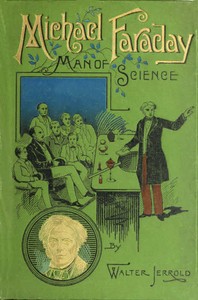
Michael Faraday, Man of Science Book Summary
Introduction
Michael Faraday stands as one of the most pivotal figures in the history of science, largely responsible for laying the groundwork for modern electrical and electromagnetic theory. His humble origins, self-taught nature, and profound dedication to understanding the natural world offer a compelling narrative of discovery and perseverance. 'Michael Faraday, Man of Science' delves into his remarkable life, exploring not only his groundbreaking scientific contributions but also the character and spirit that drove him.
What is this book about?
This book chronicles the life of Michael Faraday, from his difficult childhood and escape from a potentially harsh apprenticeship to become a laboratory assistant at the Royal Institution and the Royal Society. It details his rise to prominence through his series of groundbreaking lectures, 'The Chemical History of a Candle,' which demonstrated complex scientific principles through simple, accessible experiments. The narrative covers his most significant discoveries, including electromagnetic induction, diamagnetism, and contributions to the study of electrochemistry, effectively establishing the principles of electric motors and generators. It portrays him not just as a brilliant scientist, but as a man of deep humanity, simplicity, and unwavering curiosity, whose work fundamentally changed our understanding of the physical world.
Key Lessons
The book imparts several valuable lessons that transcend Faraday's specific discoveries. Firstly, it powerfully demonstrates that genius and profound discovery can emerge from modest beginnings and self-education. Faraday, who never received formal university education beyond basic schooling, became one of the most influential scientists of the 19th century through intense observation, relentless experimentation, and sheer intellectual curiosity. His story serves as a reminder that the potential for greatness isn't limited to the privileged or formally trained.
Secondly, the book highlights the immense power of clear communication and making complex ideas accessible. Faraday's 'Candle Lectures' weren't just experiments; they were carefully crafted demonstrations designed for the public and his peers alike. His ability to explain intricate scientific phenomena in a simple, understandable way helped disseminate knowledge and capture the public imagination, proving that understanding is not solely reserved for the academic elite.
Thirdly, it underscores the importance of observation and meticulous experimentation. Faraday's discoveries weren't the result of grand theories but came from patient, methodical observation of natural phenomena and designing clever experiments to test his hypotheses. His work exemplifies the scientific method in its purest, most dedicated form – a deep engagement with the physical world through careful, repeated observation and testing.
Finally, the book reveals Faraday's deep sense of humility and his commitment to the betterment of humanity through science. Despite his fame and the recognition he received, he remained fundamentally grounded and focused on sharing his findings. His work was driven by a genuine desire to understand the universe and to contribute to the intellectual enrichment of others, rather than solely personal glory. This portrayal encourages readers to reflect on the ethical dimensions and broader impact of scientific pursuits.
Is this book fit for me?
This book is highly recommended for readers interested in the history of science, particularly the development of electricity and magnetism. It's suitable for history enthusiasts, students of science and engineering, and anyone curious about the lives of influential figures. Readers who appreciate stories of perseverance, self-made success, and the human side of scientific giants will find it engaging. The book requires a moderate level of reading interest and patience, as it sometimes delves into scientific concepts, though they are generally explained accessibly. It's ideal if you're looking for inspiration from a remarkable individual whose work laid the foundation for countless modern technologies.
Does it still matter today?
Absolutely. Michael Faraday's discoveries are the bedrock upon which almost all modern electrical and electronic technology is built. Electromagnetic induction underpins the generation of electricity in power plants, the operation of electric motors in countless appliances and vehicles, and the function of transformers that manage power distribution. His work on electrochemistry enabled the development of batteries and electroplating. Understanding Faraday's contributions provides essential context for our technologically saturated world and inspires appreciation for the fundamental principles that drive innovation. His story of humble beginnings and self-driven genius continues to motivate aspiring scientists and engineers.
| Reading on Gutenburg | Free reading |
| Get Paperback Version on Amazon | Buy a book |
| Suggest Book : The Immortal Life of Frankenstein's Cat Book | Get on Amazon |
Conclusion
In conclusion, 'Michael Faraday, Man of Science' offers a rich, inspiring portrait of a self-taught genius whose curiosity and dedication transformed our understanding of the physical world. It celebrates the power of observation, the importance of clear communication, and the idea that scientific progress can come from anyone, regardless of background. Faraday's legacy remains profoundly relevant, underpinning modern technology and continuing to captivate our imagination. The suggested book 'The Immortal Life of Frankenstein's Cat' explores the intertwined history of science and pets, offering a different but equally fascinating perspective on scientific discovery and its impact on everyday life.