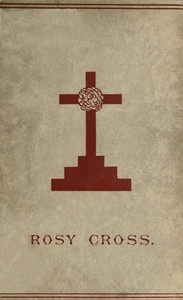
Mysteries of the Rosie Cross Or, the History of that Curious Sect of the Middle Ages, Known as the Rosicrucians; with Examples of their Pretensions and Claims as Set Forth in the Writings of Their Leaders and Disciples Book Summary
Introduction
The book 'Mysteries of the Rosie Cross' delves into the intriguing world of the Rosicrucians, a secretive society that emerged during the Middle Ages and continued to influence European thought for centuries. Authored by an individual pseudonym (often attributed to either John Alexius or the anonymous 'C.R.', though the Gutenberg version's authorship is less clear), the text examines the claims, writings, and purported activities of this enigmatic group. It aims to untangle the historical fabric surrounding the Rosicrucians, exploring their identity, motivations, and the legacy they left behind, often intertwined with the rise of Freemasonry and the Renaissance search for meaning.
What is this book about?
This book provides a historical analysis of the Rosicrucians, a curious and often mythical sect that claimed a lineage from ancient wisdom traditions and sought to reform society through secret knowledge. The author explores the origins of the Rosicrucian movement, likely connecting it to the mystical and reformist sentiments of the late Middle Ages and early Renaissance. The text delves into the foundational documents attributed to the Rosicrucians, such as the Chymical Wedding of Christian Rosenkreutz (though the author uses the spelling 'Rosie Cross'). It meticulously details the specific claims made by Rosicrucian leaders and disciples, including their supposed discovery of hidden knowledge, their role as secret guides for figures like Martin Luther and Emperor Charles V, and their promise of a 'Golden Age' or spiritual reformation. The work also examines the influence of Rosicrucian ideas on the formation of speculative Freemasonry, presenting both the allure of their esoteric doctrines and the skepticism surrounding their authenticity.
Key Lessons
One central theme explored is the nature of esoteric societies and the tension between public image and private reality. The book highlights how the Rosicrucians, like many secret groups, operated with layers of symbolism and allegory, making direct verification of their claims difficult. Their writings often blended alchemy, mysticism, Kabbalah, and Gnosticism, presenting a complex worldview intended for initiates. The lesson here is about the challenge of distinguishing authentic revelation from allegory or self-promotion within mystical traditions. The author uses examples like the allegorical Chymical Wedding to show how symbolic narratives can convey profound ideas but also remain ambiguous and open to interpretation, sometimes deliberately so.
Another key lesson concerns the influence of historical context on the Rosicrucian phenomenon. The book argues that the Rosicrucians emerged during a period of significant social, religious, and intellectual transition in Europe. Their claims of possessing lost wisdom and guiding world leaders resonated with broader anxieties about reforming the Church and society, and the rise of Humanism. This teaches us how socio-historical conditions can shape and amplify the appeal of esoteric or reformist movements. The Rosicrucians offered a narrative of hope and hidden knowledge amidst turmoil, making their story a lens through which to understand the complex interplay between faith, reason, and political change.
Furthermore, the book examines the role of secrecy and symbolism in maintaining the integrity and allure of the Rosicrucian order. It discusses how their rituals and communications were often coded, relying on complex allegories and symbols (like the cross and the rose) to convey meaning. This raises questions about how secrecy functions in intellectual and spiritual communities and the potential for both preservation of knowledge and its distortion over time. The text also touches upon the rise of Freemasonry as a direct consequence of Rosicrucian ideas, illustrating how one esoteric movement could profoundly influence the structure and philosophy of another major organization.
Is this book fit for me?
This book would be particularly fitting for readers interested in medieval and early modern European history, the history of esotericism, the development of Freemasonry, or the intersection of mysticism and political power. If you enjoy exploring historical mysteries, analyzing foundational myths, or delving into the symbolism surrounding secretive groups, this work offers a detailed look. It is well-suited for students and academics in history, religious studies, or the history of ideas. Additionally, readers fascinated by the Knights Templar (who, while distinct, share some thematic concerns with secret societies) might find parallels discussed indirectly. However, it may be less ideal for those seeking purely practical occult techniques or looking for a definitive, universally accepted history of the Rosicrucians, as the book itself often treats their existence and claims with a degree of historical scrutiny and presents a complex picture rather than simple fact.
Does it still matter today?
Yes, the book and the subject of the Rosicrucians still matter today. Their ideas, symbols, and legacy are embedded within modern Freemasonry, New Age spirituality, and various conspiracy theories. The Rosicrucian myth speaks to enduring human fascinations with secret knowledge, lost civilizations, and the possibility of hidden forces guiding world events. The themes of reform, secrecy, and the interpretation of cryptic texts remain relevant for understanding contemporary movements and belief systems. The book provides crucial historical context for appreciating these ongoing cultural phenomena and the historical roots of modern Rosicrucianism and its offshoots.
| Reading on Gutenburg | Free reading |
| Get Paperback Version on Amazon | Buy a book |
| Suggest Book : The Rosicrucian Enlightenment Book | Get on Amazon |
Conclusion
In conclusion, 'Mysteries of the Rosie Cross' serves as a valuable historical investigation into one of the most perplexing and influential phenomena of the late Middle Ages and Renaissance. It unpacks the claims, the context, and the lasting impact of the Rosicrucians, shedding light on the complex interplay between mysticism, secrecy, and historical change. While the book presents a scholarly analysis, it acknowledges the speculative nature surrounding the Rosicrucians, leaving room for ongoing debate. Understanding their story, as presented here, provides important context for the development of modern secret societies and continues to fuel our enduring interest in the hidden currents of history and the quest for ultimate knowledge.