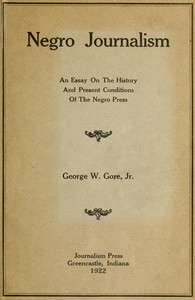
Negro Journalism: An Essay on the History and Present Conditions of the Negro Press Book Summary
Introduction
E. Franklin Frazier's Negro Journalism: An Essay on the History and Present Conditions of the Negro Press, published in 1928, stands as a foundational text in the study of African American media history. Frazier, a prominent sociologist and historian, meticulously documents the development of the press serving the Black community, primarily from the post-Civil War era through the early 20th century.
What is this book about?
The book is a comprehensive historical survey and critical analysis of the Negro press. Frazier traces its origins, growth, and evolution, examining the types of publications, their readerships, and the range of content they produced. He argues that this press was not merely an outlet for information but a crucial institution for the formation and sustenance of Black identity, community organization, political mobilization, and cultural expression. Frazier also assesses its effectiveness in addressing the social and economic challenges faced by African Americans during this period.
Key Lessons
This book fundamentally reveals the press as a vital Black institution, emerging not just after emancipation but gradually building from earlier forms of communication, serving as a space where African Americans could control their own narrative and shape their community's consciousness. It wasn't just a newspaper; it was a community hub, a political arena, an educational resource, and a cultural showcase.
Frazier highlights the political and social functions of the Negro press. It was instrumental in disseminating political ideologies (from accommodation to radical change), mobilizing voters, exposing racism and inequality, and fostering collective action. Publications often served specific political factions or advocated for particular social reforms, demonstrating the press's role in internal debates and the struggle for civil rights and economic justice. For instance, papers debated the merits of Booker T. Washington's accommodationist stance versus W.E.B. Du Bois's advocacy for immediate political and social equality.
The book also examines the economic challenges and limitations of the Negro press. Its dependence on a relatively small, yet dedicated, readership base, and its struggle for financial sustainability against segregation and discrimination, shaped its content and reach. Frazier analyzes how these constraints sometimes led to compromises or limitations in the press's ability to fully represent the diverse opinions within the Black community. Furthermore, he discusses the role of editors and publishers, who wielded significant influence but also faced immense pressure and censorship.
Is this book fit for me?
This book is essential reading if you are interested in:
- African American history and culture, particularly the role of self-help and community building.
- Sociology and the study of minority media, media history, and journalism.
- The history of civil rights activism and political organizing in the United States.
- Understanding the foundational critiques of racial inequality and the power of representation.
- The evolution of Black media, providing context for later developments like Black radio and television.
Does it still matter today?
Absolutely. Frazier's analysis of the challenges faced by the Negro press—dealing with systemic racism, limited resources, fighting for credibility, and the quest for authentic representation—resonates powerfully with contemporary discussions about media diversity, representation in journalism, and the role of minority-owned media platforms. The book provides crucial historical context for understanding the ongoing struggles and importance of ensuring diverse voices are heard and shaping the narrative in media landscapes.
| Reading on Gutenburg | Free reading |
| Get Paperback Version on Amazon | Buy a book |
| Suggest Book : Stamped: Racism, Antiracism, and You Book | Get on Amazon |
Conclusion
E. Franklin Frazier's Negro Journalism remains a vital and insightful work. It not only charts the course of a critical American institution but also powerfully illuminates the enduring importance of a media space free from dominant cultural biases for marginalized communities. Understanding this history enriches our appreciation of the ongoing fight for equitable representation in the media.