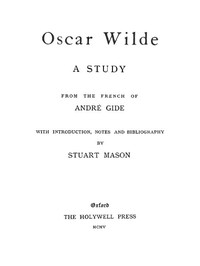
Oscar Wilde, a study Book Summary
The book offers several key insights, though heavily colored by its author's perspective:
1. The Intersection of Art and Life: Harris argues that Wilde's flamboyant personal life and controversial behavior were inseparable from his art. He suggests that Wilde's aesthetic principles, which championed beauty over morality, were hypocritical when applied to his own conduct. For example, Wilde's defense of 'art for art's sake' is contrasted with his personal scandals, raising questions about the sincerity of his aesthetic credo.
2. The Price of Notoriety and Sexuality: A central theme is Wilde's inability to reconcile his public persona as a witty, refined gentleman with his private life, particularly his homosexuality, which was socially unacceptable. The book portrays his relationships, including the infamous Lord Alfred Douglas affair, as destructive forces that contributed to his ruin. It suggests that while his wit and charm were assets, his pursuit of pleasure and defiance of convention ultimately led to his downfall.
3. The Critique of Victorian Hypocrisy: While critical of Wilde, the book implicitly critiques the rigid, judgmental society that condemned him. Harris portrays Wilde as a victim of the era's hypocritical moral standards, highlighting the severe consequences of being openly gay in Victorian England. However, the criticism of Wilde himself often overshadows this critique.
4. The Dilemma of Biographical Interpretation: The book serves as a case study in the challenges of writing a biography, especially one that includes interviews. Harris's work demonstrates how an author's own biases and preconceptions can shape the narrative, potentially overshadowing or misinterpreting the subject's own voice and actions. It raises questions about the reliability of biographical accounts and the role of the biographer's judgment.
This book might be suitable if:
- You are interested in Oscar Wilde's life and the Victorian era, despite the biography's controversial stance.
- You want to understand the different perspectives on Wilde, including critical ones.
- You are prepared to engage with a challenging and biased source, aware that its interpretations should be viewed critically.
- You are specifically researching Frank Harris or early 20th-century biographical writing.
- You have a tolerance for potentially uncomfortable or judgmental content about historical figures.
However, you might want to avoid it if:
- You seek a balanced, sympathetic, or modern take on Wilde's life.
- You are looking for a primary source (Wilde's own works) or a more conventional biography.
- You find the author's overt bias distracting from understanding Wilde himself.
- You are sensitive to discussions of sexuality and moral judgment.
| Reading on Gutenburg | Free reading |
| Get Paperback Version on Amazon | Buy a book |
| Suggest Book : The Importance of Being Earnest Book | Get on Amazon |