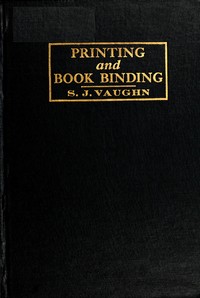
Printing and bookbinding for schools Book Summary
Welcome to the World of Books
From ancient scrolls to modern e-books, the history of books is a fascinating journey of human ingenuity and creativity. Understanding how books are made connects us to our past and appreciates the technology that brings stories and knowledge to life. This summary explores a foundational text in the history of book production.
A Pioneering Text for Educational Printing
"Printing and Bookbinding for Schools" is an early and practical guide designed primarily for educators and students interested in the mechanics of producing printed materials. Originally published in the early 20th century, it breaks down complex processes into accessible steps suitable for school workshops and laboratories.
The book covers two main areas: printing and bookbinding. In printing, it explains basic typesetting, the use of the hand-operated press, ink mixing, and simple printing techniques using block letters or type. For bookbinding, it details the construction of simple paperbacks, covers, and the use of sewing threads and basic adhesives, often emphasizing cardboard construction which was common for school projects.
Its core value lies in its hands-on, instructional approach, making the history and practice of book production tangible for a younger audience.
Key Lessons from "Printing and Bookbinding for Schools"
This book demystifies the book creation process, teaching fundamental skills and principles that were revolutionary for its time and still hold educational value:
The Hands-On Nature of Printing: The book emphasizes that printing isn't just about machines and mass production, but can be a manual craft. It teaches students how to physically set type (even with simple movable type), operate a press by hand, mix inks, and understand the transfer process from page to paper. A key lesson is the importance of alignment, pressure, and the physical interaction between the printing surface and the paper.
Understanding Basic Book Structure: It breaks down the components of a book – pages, signatures (groups of pages folded together), gatherings, covers, spines. Students learn how pages are physically assembled, sewn, glued, and bound together to form a durable book. This includes practical aspects like folding, trimming, and creating a strong spine joint.
Historical Context and Appreciation: While instructional, the book implicitly provides context. By learning these older techniques, readers gain a deeper appreciation for the mechanization and industrialization of book production that followed. It shows the effort and skill involved in creating even simple printed matter before modern technology.
Problem-Solving and Resourcefulness: Many school projects under this book's influence likely involved limited resources. A recurring theme is finding simple, effective solutions using readily available materials. This fosters creativity, resourcefulness, and an understanding of constraints in design and production.
Promoting Literacy and Creativity: Ultimately, teaching students how to print their own stories, poems, and reports directly connects them to the tools of communication. It empowers them to create physical, tangible books, fostering both technical skills and creative expression.
Is This Book Fit For You?
This book is particularly suitable for:
- Educators (especially those teaching arts, crafts, technology, or history) looking for a foundational text or inspiration for hands-on book production activities in a school or workshop setting.
- Students involved in projects related to book arts, printing, or crafts, or those interested in understanding the history of printing and binding.
- Individuals with an interest in historical techniques, manual crafts, or the DIY aspect of publishing.
- Those curious about the evolution of printing technology and how it differs from modern digital methods.
While it may lack the modern technical details or safety considerations for industrial printing, its focus on fundamental, hands-on processes makes it a valuable resource for learning the basics.
Does It Still Matter Today?
Yes, the fundamental principles and hands-on skills taught in "Printing and Bookbinding for Schools" still hold significant educational value today, even amidst advanced technology:
Comprehension of Modern Techniques: Understanding the basic mechanisms of printing (pressure, ink application, image transfer) provides a crucial framework for grasping how modern offset, digital, and even 3D printing works. It helps demystify the technology we use daily.
Value of Craftsmanship and Tangibility: In an increasingly digital world, learning traditional bookbinding emphasizes the value of physical objects, craftsmanship, and the skill required to create something lasting by hand. It connects students to the history and cultural significance of books.
Interdisciplinary Learning: The book naturally bridges art, history, science (chemistry of inks and papers), and technology. Its principles encourage interdisciplinary thinking and hands-on learning, which are valuable pedagogical approaches.
Resilience of Book Arts: Despite digital dominance, there is a continuing interest in traditional bookbinding and printmaking as art forms and hobbies. The book serves as a historical baseline for these ongoing crafts.
While the specific equipment described is largely obsolete for mass production, the underlying concepts and the educational philosophy behind teaching these skills remain relevant.
| Reading on Gutenburg | Free reading |
| Get Paperback Version on Amazon | Buy a book |
| Suggest Book : The Bookbinding Bible: A Complete Guide to Designing and Constructing Bookcases, Boxes, and Book Covers Book | Get on Amazon |
A Timeless Foundation
"Printing and Bookbinding for Schools" offers a valuable window into the fundamental processes that shaped the history of publishing. While its specific methods are now largely superseded, its pedagogical approach—emphasizing hands-on learning, understanding materials, and connecting students to the physical creation of knowledge—remains a powerful educational tool. It provides a solid foundation for appreciating the journey from manuscript to printed book, both historically and in the context of modern techniques.