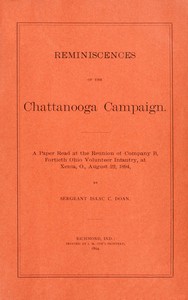
Reminiscences of the Chattanooga campaign A paper read at the reunion of Company B, Fortieth Ohio volunteer infantry, at Xenia, O., August 22, 1894 Book Summary
The book offers several key insights through its personal and historical narrative:
1. The Power of Personal Experience in History: The author emphasizes that his recollections, though colored by memory and the passage of time, provide a unique texture to the historical record. Reading his account of the mud, the fear, the comradeship, and the confusion gives a depth found in official military reports. For example, his descriptions of the logistical challenges—like finding food or navigating treacherous terrain—humanize the strategic movements and make the grand battles feel immediate and visceral.
2. The Importance of Terrain in Military Success: The Chattanooga campaign vividly demonstrates how geography dictates military outcomes. The strategic locations of Lookout Mountain and Missionary Ridge, the Cumberland Plateau, and the surrounding valleys became the focal points of the battle. The Union victory hinged not only on troop numbers and leadership but also on controlling these high ground positions, offering clear fields of fire and dominating views of the enemy's movements. The author details how Union forces used the terrain to outflank Confederate positions.
3. The Nature of Leadership Under Pressure: The book offers perspectives on Union generals like Grant and Sherman, presenting their decisions and strategies from the ground level. While the author maintains respect, he also conveys the realities soldiers faced under command, the importance of perseverance, and the immense pressure on leaders to achieve victory. Conversely, it portrays Confederate commanders like Bragg, suggesting how strategic errors and a lack of decisive action contributed to the Confederate defeat.
4. The Human Cost of War: Beyond the strategic maneuvers, the book recounts the brutal realities faced by soldiers daily. This includes the hardships of campaigning—disease, hunger, fatigue, and the constant threat of combat—as well as the moments of camaraderie and sacrifice. These personal reflections underscore the immense cost of war beyond mere statistics and battlefield losses.
If you are interested in:
- The American Civil War, specifically the Western Theater.
- Primary source accounts and personal narratives from the war.
- Historical military campaigns and strategies.
- The role of specific Union regiments (like Ohio volunteers) in major battles.
- Understanding the human side and experiences of soldiers during the Civil War.
| Reading on Gutenburg | Free reading |
| Get Paperback Version on Amazon | Buy a book |
| Suggest Book : Team of Teams: New Rules of Engagement for a Complex World Book | Get on Amazon |