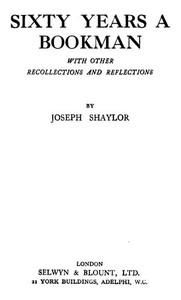
Sixty Years a Bookman, With Other Recollections and Reflections Book Summary
This book offers several valuable insights, primarily into the history of the book trade and the economics of publishing, viewed through a personal lens:
1. The Evolution of the Book Trade: Knight meticulously documents how the book business changed. He describes the meticulous process of selecting books, dealing with wholesalers, managing inventory, and the importance of location and customer service. He contrasts the old ways (small, independent shops, slower turnover) with emerging trends (faster turnover, larger stores, aggressive advertising, the threat of chain stores). This provides a fascinating historical snapshot of commerce and retail transformation.
2. Navigating the Economics of Bookselling: Knight shares practical wisdom about the business side. He explains the challenges of dealing with fluctuating costs (printing, shipping, paper shortages), managing finances, and making decisions about which books to stock or discount. His reflections on the economics of buying and selling books offer timeless lessons about market forces and business acumen within a specific industry niche.
3. The Importance of Personal Connection and Curiosity: Despite the business aspects, Knight emphasizes the personal joy and intellectual stimulation derived from books and the interactions surrounding them. His success stemmed partly from his deep knowledge, his willingness to listen to customers, and his own voracious reading habits. This underscores the value of genuine passion, expertise, and human connection in any service-oriented business, even amidst rapid change.
4. Resilience and Adaptation in Industry: Facing competition from new forms of retail and changing consumer habits, Knight's memoir implicitly shows how individuals navigated these changes. While the book focuses on his personal journey, it reflects the broader story of how businesses must adapt to survive. It highlights both the resistance to change and the necessity of finding new ways to connect with customers.
You should consider reading this book if:
- You have a keen interest in the history of books, publishing, or the book trade.
- You enjoy memoirs and personal histories that offer insights into past eras and professions.
- You are fascinated by the business aspects of publishing or retail, particularly from a historical perspective.
- You appreciate learning about the economics of a specific industry and how market forces shape businesses over time.
- You are interested in the life and career of an American bookseller from the late 19th to the early 20th century.
- You enjoy reading engaging narratives that blend business, history, and personal reflection.
Yes, this book still matters today, primarily as a historical document and a case study in industry evolution.
It provides invaluable primary source material for historians and researchers studying the development of the American publishing industry, the book trade, and retail practices during a crucial period of transformation. While specific business challenges may differ today (e.g., digital books, online retail), the fundamental themes of adaptation, the economics of content distribution, the role of physical spaces (like independent bookstores) in culture, and the changing relationship between readers, publishers, and sellers remain relevant. Knight's insights into the changing consumer habits and the pressures on small businesses offer a perspective that can inform understanding of current challenges facing the book industry.
| Reading on Gutenburg | Free reading |
| Get Paperback Version on Amazon | Buy a book |
| Suggest Book : The History of Reading Book | Get on Amazon |