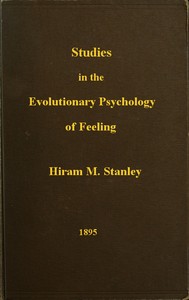
Studies in the Evolutionary Psychology of Feeling Book Summary
Introduction
Explore the fascinating world of feelings through the lens of evolution. This summary guides you through 'Studies in the Evolutionary Psychology of Feeling,' a work that delves into the deep roots of our emotions, explaining why certain feelings are universal and how they shaped our species' survival. It's a journey into the fundamental building blocks of human experience.
What is this book about?
Published in 1988, 'Studies in the Evolutionary Psychology of Feeling' by Frank S. Easterbrook is a collection of papers that apply principles of evolutionary biology to the study of human emotions. It proposes that feelings, like physical traits, are adaptations—products of natural selection that conferred survival and reproductive advantages to our ancestors. The book argues that many emotions are not unique cultural inventions but rather evolved psychological mechanisms designed to respond to specific environmental challenges or social situations.
Key Lessons
The book posits that emotions are ancient survival mechanisms. For instance, fear triggers avoidance behavior towards perceived threats, increasing chances of survival. Conversely, feelings like joy or excitement likely signaled the discovery of resources or opportunities for mating and social bonding, promoting reproductive success. Another core idea is the universality of certain emotional responses. While cultural expressions vary, the underlying physiological and psychological experiences of basic emotions (like happiness, sadness, anger, fear, surprise) are remarkably similar across diverse cultures, suggesting their deep evolutionary roots rather than recent cultural learning. Furthermore, the book suggests feelings are crucial for social navigation. Empathy, guilt, shame, and other social emotions likely evolved to facilitate cooperation, maintain social bonds, enforce norms, and manage social relationships within groups, which was vital for early human survival in complex social environments. The authors also explore how feelings influence decision-making and perception, often subtly shaping our choices and interpretations of the world to align with those ancient survival imperatives. Finally, the book emphasizes that while these mechanisms are powerful, they can sometimes lead us astray in modern contexts, causing maladaptive behaviors or emotional distress when the environment has changed drastically from the ancestral one.
Is this book fit for me?
This book is ideal for readers interested in psychology, particularly evolutionary psychology, anthropology, or the biological underpinnings of human behavior. It's suited for students and academics in these fields looking for foundational texts. Anyone curious about 'why' humans feel certain things, how emotions work, or the scientific basis of feelings beyond basic emotion theory will find it engaging. It offers a historical perspective on how evolutionary thinking was applied to the study of feelings, preceding some of the more recent popularizations of the field.
Does it still matter today?
Yes, profoundly. Understanding feelings through an evolutionary lens remains highly relevant. It helps demystify emotions, showing they are not random but have adaptive functions, even if sometimes those functions seem mismatched with modern life. This perspective is crucial for psychology, informing therapies and treatments. It aids in understanding social dynamics, prejudice, cooperation, and conflict by exploring the evolved basis of social emotions. It also informs fields like marketing, user experience design, and leadership by recognizing how these deep-seated feelings influence behavior and decision-making in contemporary settings. While the field has advanced and critiques exist, the fundamental questions the book explores—why we feel what we feel—remain central to understanding the human condition.
| Reading on Gutenburg | Free reading |
| Get Paperback Version on Amazon | Buy a book |
| Suggest Book : The Blank Slate Book | Get on Amazon |
Conclusion
'Studies in the Evolutionary Psychology of Feeling' provides a foundational and thought-provoking exploration into the 'why' behind our emotions. By framing feelings as evolved adaptations, it offers powerful insights into human nature, behavior, and sociality. Though an older text, its core ideas continue to resonate and influence modern scientific thinking about the human mind and heart. Understanding our feelings through an evolutionary perspective enriches our self-knowledge and helps us navigate the complexities of our inner lives and interactions with others.