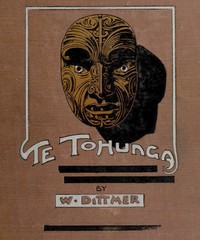
Te Tohunga: The ancient legends and traditions of the Maoris Book Summary
Introduction
Welcome to a journey into the heart of Maori culture. This summary explores 'Te Tohunga', a collection of ancient legends, traditions, and beliefs of the Maori people of New Zealand. The book serves as a repository of their worldview, explaining the forces that shaped their society, their connection to the natural world, and their spiritual beliefs. It's an invaluable resource for understanding the rich tapestry of indigenous life in Aotearoa (New Zealand), offering insights into a unique and vibrant Polynesian heritage.
What is this book about?
Authored by an unknown Maori writer (traditionally attributed to Te Kooti Arikirangi Te Taringa, a notable Maori leader, writer, and teacher, though the specific authorship for this compilation is debated), 'Te Tohunga' is not a single narrative but a compilation. It gathers and preserves a wide array of traditional Maori knowledge, often passed down orally for generations. The book delves into cosmology (how the universe began), genealogy (the importance of iwi and hapu lineages), creation myths, the nature of the spirit (Wairua), the significance of Moko (tattooing), tribal laws (Tikanga), social customs, and the relationship between humans, nature, and the divine. It essentially documents the foundational beliefs and practices that underpin Maori identity and culture.
Key Lessons
Exploring 'Te Tohunga' reveals profound insights into the Maori understanding of the world and their place within it. One central theme is the deep interconnectedness of all things. Maori cosmology often describes the world as a series of parallel planes or dimensions (the upper, middle, and lower worlds), inhabited by diverse spirits and ancestors. Humans are seen as a specific part of this intricate web, responsible for maintaining balance. This is evident in their relationship with the natural environment (mana whenua - guardianship of the land) and their respect for all living beings. Understanding the concept of 'Wairua' (the spirit or soul) is another crucial lesson. It emphasizes that life extends beyond the physical body, influencing actions and connecting individuals to their ancestors and descendants. This belief fosters a sense of responsibility and continuity. Furthermore, the book highlights the importance of 'Kawa' (customs and protocols), which are not merely rules but expressions of respect, order, and identity. Adhering to Tikanga (customary law) governs social interactions, ceremonies, and resource use, ensuring harmony within the community and with the environment. The significance of Moko, as a form of communication with the spirit world and a record of one's genealogy and status, underscores the value placed on heritage and personal identity. Overall, 'Te Tohunga' teaches a holistic worldview where spirituality, social structure, nature, and history are intertwined, providing a blueprint for living in balance and respect.
Is this book fit for me?
This book is particularly suited for individuals interested in: Maori culture, New Zealand history, Polynesian anthropology, indigenous spirituality, or world mythology. If you are seeking a foundational understanding of Maori beliefs, traditions, and worldview, this book is an essential read. It's also valuable for students of anthropology, historians, genealogists tracing Maori ancestry, or anyone wanting to deepen their appreciation of New Zealand's indigenous heritage. Additionally, readers looking for insights into sustainable living, community values, or the importance of respecting ancestral traditions might find resonance in its timeless principles. However, its dense presentation of traditional lore might be challenging for casual readers seeking a light read.
Does it still matter today?
Absolutely. 'Te Tohunga' remains profoundly relevant. The Maori people have experienced significant historical trauma (the loss of land, cultural suppression), and there is a powerful ongoing movement for cultural reclamation and revitalization. The principles outlined in these ancient texts—respect for the environment (mana whenua), the importance of community and collective responsibility (whanau, hapu, iwi), the value of oral tradition and cultural continuity, and the assertion of indigenous rights—are central to contemporary Maori struggles and identity politics. Understanding these foundational beliefs helps explain the persistence and resilience of Maori culture in the modern world. It also provides valuable perspectives on indigenous sovereignty, environmental ethics, and alternative social structures that are gaining global attention. The knowledge encoded in 'Te Tohunga' is not just historical curiosity; it is living wisdom shaping the present and future.
| Reading on Gutenburg | Free reading |
| Get Paperback Version on Amazon | Buy a book |
| Suggest Book : Te Ao Moko: A New History of the Maori Book | Get on Amazon |
Conclusion
'Te Tohunga' offers a direct window into the soul of the Maori people. It compiles centuries of accumulated wisdom, presenting a worldview rich in spiritual depth, social complexity, and environmental wisdom. While its dense prose reflects traditional oral transmission, its core message—a holistic understanding of existence and responsibility—resonates powerfully even today. It is a foundational text for understanding not just Maori culture, but also the enduring power of indigenous knowledge systems. For further exploration, 'Te Ao Moko: A New History of the Maori' by R. Hunter provides a more modern and analytical perspective on the same cultural roots.