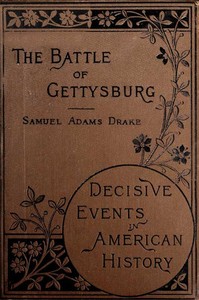
The Battle of Gettysburg, 1863 Book Summary
Introduction
The Battle of Gettysburg, fought from July 1 to 3, 1863, stands as one of the most pivotal engagements of the American Civil War. Located in Pennsylvania, this three-day battle resulted in a decisive Union victory and is often considered the turning point of the conflict. This book delves into the details surrounding this crucial battle, examining the strategic decisions, the immense human cost, and the legacy of this defining moment in American history.
What is this book about?
The book "The Battle of Gettysburg, 1863" provides a detailed account of the planning, execution, and outcome of the Battle of Gettysburg. It explores the Union and Confederate strategies leading up to the battle, the performance of key commanders on both sides, and the experiences of soldiers during the intense fighting. The narrative typically covers major engagements like the fighting on McPherson's Ridge, the Peach Orchard, the Devil's Den, Little Round Top, the Wheatfield, and Pickett's Charge, analyzing their significance within the broader context of the battle. The book aims to offer readers a comprehensive understanding of why this battle was fought, how it unfolded, and its profound impact on the Civil War and American history.
Key Lessons
This book offers several important insights into military history and leadership:
Firstly, the importance of terrain and positioning cannot be overstated. The Union's defensive advantage at Gettysburg, particularly on the second and third days, played a critical role in their victory. General Meade's decision to occupy the high ground allowed Union forces to leverage the natural defenses, turning a potential invasion into a costly retreat for the Confederates. Conversely, the Confederate failure to secure advantageous ground early on, notably at the start of the battle on July 1st, hampered their initial offensive capabilities.
Secondly, the book underscores the dangers of overconfidence and underestimating the enemy. Confederate leaders, emboldened by early successes in Virginia and the Eastern Theater, may have overestimated Union resolve and underestimated Lee's strategic gamble in invading Pennsylvania. Similarly, Union commanders, though often outnumbered in parts of the battle, demonstrated effective coordination and adaptability in responding to Confederate advances.
Thirdly, the immense human cost of the battle serves as a stark reminder of the brutal realities of war. The sheer scale of casualties, particularly concentrated in specific areas like the "Bloody Angle" or the Wheatfield, highlights the devastating consequences of tactical decisions and the fierce determination of soldiers on both sides. It forces readers to confront the personal tragedy embedded within the broader historical narrative.
Finally, the book often examines the significance of leadership under extreme pressure. How commanders reacted to setbacks, made critical decisions in real-time, and inspired (or failed to inspire) their troops significantly shaped the battle's outcome. The contrasting leadership styles of Generals Meade and Lee, as well as their subordinates, provide case studies in military command.
Is this book fit for me?
This book would be appropriate for:
- Individuals with a keen interest in American Civil War history.
- Students and educators seeking a detailed analysis of a key Civil War battle.
- Those interested in military strategy, leadership, and decision-making under pressure.
- Readers who appreciate detailed historical accounts with a focus on the human and tactical elements of warfare.
- Anyone looking to understand a pivotal moment that significantly altered the course of the Civil War.
You might find this book less suitable if you are looking for a concise overview or if you are specifically interested in the political or social aspects of the Civil War beyond the military conflict.
Does it still matter today?
Yes, the Battle of Gettysburg still matters today. It represents more than just a military engagement; it is a symbol of the Civil War's defining struggle. The battle's outcome prevented a potential Confederate invasion of the North, potentially altering the war's trajectory. It remains a crucial reference point for understanding the nature of warfare, the importance of decisive victories, and the immense sacrifices made for national unity.
Its lessons on leadership, strategic positioning, the consequences of underestimation, and the human cost of conflict continue to be studied by military historians and strategists. Furthermore, Gettysburg National Military Park, dedicated to preserving the battlefield, serves as a living history site, reminding generations about the cost of division and the importance of preserving the nation as Lincoln emphasized in his Gettysburg Address.
Therefore, I suggest reading "Battle Hymn of the Tiger Mother" by Chua Amy. This book, while seemingly unrelated, offers a contrasting perspective on discipline and outcomes. It examines different approaches to child-rearing and their impact on success, providing a different lens through which to view the concept of rigorous training and its effects, even outside the battlefield.
| Reading on Gutenburg | Free reading |
| Get Paperback Version on Amazon | Buy a book |
| Suggest Book : The Family: A World History Book | Get on Amazon |
Conclusion
"The Battle of Gettysburg, 1863" offers a detailed exploration of one of the most critical battles in American history. It provides valuable insights into the strategic, tactical, and human dimensions of the Civil War's turning point. Readers interested in this pivotal event will find a wealth of information on the battle's planning, execution, and lasting significance. While focused primarily on the military aspects, it effectively conveys the immense scale and tragedy of the conflict. For those seeking to understand this defining moment and its ongoing relevance, this book serves as an essential resource.