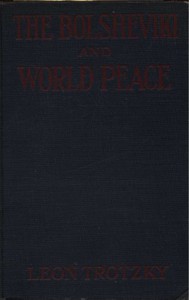
The Bolsheviki and World Peace Book Summary
Published in 1919, The Bolsheviki and World Peace by Leonard Abbott offers a contemporary perspective on the Russian Revolution and the early years of Bolshevik rule. Written amidst the chaos of World War I and its immediate aftermath, the book aims to analyze the Bolshevik ideology and its potential impact on global peace. It’s a product of its time, reflecting the anxieties and hopes surrounding the new Soviet state.
The book isn’t a neutral historical account; it’s a critical examination of the Bolsheviks’ claim to be peace-loving revolutionaries. Abbott, a journalist and political commentator, meticulously dissects their rhetoric, policies, and actions, arguing that their ultimate goal wasn’t world peace but rather the propagation of a global communist revolution. He explores the Bolsheviks' stance on war, their treaty negotiations (specifically Brest-Litovsk), their internal power struggles, and their methods of consolidating control. The core question Abbott poses is whether the Bolsheviks genuinely desired peace or simply used the promise of peace as a tool to achieve their political ambitions.
One of the most significant lessons from Abbott’s work is the importance of scrutinizing political ideologies and separating rhetoric from reality. The Bolsheviks, while denouncing imperialism and advocating for a “peace without victors,” ultimately engaged in policies that were arguably just as expansionist, albeit under the guise of spreading communism. The Treaty of Brest-Litovsk, where Russia ceded vast territories to Germany, is a prime example. While framed as a necessary evil to end Russia’s involvement in the war, it also conveniently removed obstacles for the Bolsheviks to consolidate power internally. It demonstrates how easily promises of peace can be sacrificed on the altar of political expediency.
Another crucial takeaway is the inherent tension between national interest and international revolution. Abbott argues that the Bolsheviks were torn between the practical demands of governing a war-torn nation and their ideological commitment to a worldwide uprising. This internal conflict manifested in contradictory policies; for instance, supporting national liberation movements in some areas while simultaneously suppressing dissent within Russia. The book illustrates how difficult it is for any state, even one founded on revolutionary principles, to completely transcend its own self-preservation instincts.
Furthermore, The Bolsheviki and World Peace highlights the dangers of utopian thinking. The Bolsheviks believed they possessed a scientific understanding of history and society, allowing them to predict and shape the future. This conviction led to a disregard for practical constraints and a willingness to impose radical changes on society, often with devastating consequences. Abbott points out how this rigid adherence to ideology blinded the Bolsheviks to the complexities of international relations and ultimately undermined their stated goal of achieving lasting peace. The pursuit of a perfect society, he suggests, can easily justify real-world suffering.
Finally, the book serves as a cautionary tale about the fragility of democratic institutions. Abbott details how the Bolsheviks systematically dismantled Russia’s nascent democratic structures, exploiting popular discontent and utilizing propaganda and repression to maintain control. This process demonstrates how easily revolutionary fervor can morph into authoritarian rule, and how vital it is to safeguard democratic principles even in times of crisis. It underlines the necessity of a robust civil society and independent institutions to prevent the concentration of power in the hands of a few.
This book is ideal for readers interested in:
- Early 20th-century history, particularly the Russian Revolution.
- The origins and development of communist ideology.
- The complexities of international relations during and after World War I.
- Critical analysis of political propaganda and rhetoric.
- Understanding the challenges of building a new political order.
Be aware that it's written from a distinctly anti-Bolshevik perspective, so it’s best read alongside other accounts to gain a balanced understanding.
Yes, absolutely. While the specific context of the Bolshevik Revolution is historical, the book’s core themes – the dangers of ideological extremism, the tension between national interest and global ideals, and the fragility of democratic institutions – remain remarkably relevant. We continue to see these dynamics play out in contemporary political conflicts and movements around the world. The book’s emphasis on critically evaluating power structures and recognizing the gap between stated intentions and actual outcomes is a skill crucial for navigating today's complex information landscape.
To further explore these themes in a more contemporary context, I suggest reading:
| Reading on Gutenburg | Free reading |
| Get Paperback Version on Amazon | Buy a book |
| Suggest Book : The Shock Doctrine: The Rise of Disaster Capitalism Book | Get on Amazon |
The Bolsheviki and World Peace is a valuable, if biased, window into a pivotal moment in history. Leonard Abbott’s sharp critique of the Bolsheviks provides essential insights into the challenges of revolution, the allure of utopian ideologies, and the enduring importance of safeguarding democratic values. It's a reminder that the pursuit of peace requires more than just good intentions; it demands a clear-eyed assessment of power, ideology, and human nature.