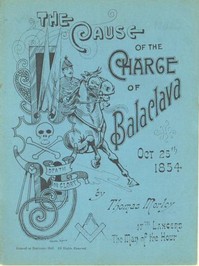
The Cause of the Charge of Balaclava Book Summary
Introduction
The Charge of the Light Brigade during the Battle of Balaclava in 1854 is one of the most famous and often misunderstood episodes of the Crimean War. For many, it represents a dramatic, almost romanticized, moment of bravery leading to a futile charge against overwhelming odds. However, 'The Cause of the Charge of Balaclava' delves deeper than the popular narrative, offering a critical examination of the events, decisions, and underlying causes that led to this iconic, yet arguably tragic, military action.
What is this book about?
'The Cause of the Charge of the Light Brigade' is an analysis of the strategic and command failures surrounding the Battle of Balaclava, specifically focusing on the events leading to the 'Charge'. The book moves beyond the myth of a simple, brave but doomed charge, instead scrutinizing the political and military context, the personalities involved, and the flawed intelligence that resulted in the catastrophic order. It argues that the Charge was not necessarily the intended outcome but rather a consequence of a series of errors and miscalculations at the highest levels of command.
Key Lessons
One central lesson from the book is the critical danger of flawed intelligence and poor communication in military command structures. The decision-makers in 1854, driven by incomplete and inaccurate information about the enemy's positions, made a catastrophic strategic error. Mistaken reports about the depth of the Russian defenses in the Redan and the presence of artillery led to the flawed order for the Light Brigade's attack.
Another significant lesson concerns the disconnect between strategic objectives and tactical execution. While the overall goal was to relieve the siege of Sevastopol, the specific order for the Light Brigade's charge was based on a misunderstanding of the immediate tactical situation. This highlights how even with good intentions, poor tactical decisions based on flawed data can completely derail strategic aims and lead to devastating losses.
The book also emphasizes the importance of clear command responsibility. Who made the decisions that led to the Charge? How was information filtered upwards and downwards? The analysis suggests a diffusion of responsibility and a lack of effective checks and balances, allowing flawed decisions to be made and executed without sufficient challenge from subordinates or superiors.
Furthermore, the book prompts a reflection on the role of political influence in military affairs. The Crimean War was as much a political conflict as a military one. The book examines how political pressures and priorities sometimes superseded purely military considerations, contributing to the flawed strategic landscape in which the Charge took place.
Is this book fit for me?
If you are interested in military history, particularly the 19th century, the Crimean War, or the role of leadership and decision-making under pressure, this book is likely to be suitable. It offers a fresh perspective on a well-known historical event, challenging the popular narrative and providing a more nuanced understanding of the causes behind the Charge. Readers who enjoy historical analysis, military strategy, or books that debunk myths and explore the human element in conflict will find value in its critical approach.
Does it still matter today?
Yes, absolutely. The issues explored in the book—flawed intelligence, poor communication, command failures, the disconnect between strategy and tactics, and the influence of external pressures (political or otherwise) on decision-making—are timeless and highly relevant to modern military and even corporate leadership contexts. Understanding how past mistakes occurred helps in designing better systems, improving command structures, enhancing information flow, and developing more robust decision-making processes. The lessons about the dangers of groupthink, the importance of critical assessment of information, and the need for clear accountability remain profoundly applicable.
However, while the specific historical context of the Crimean War is unique, the underlying themes are universal. For a broader exploration of how leaders navigate complex situations, make strategic decisions, and manage crises, considering a more contemporary work might be beneficial.
| Reading on Gutenburg | Free reading |
| Get Paperback Version on Amazon | Buy a book |
| Suggest Book : Thinking with the Best: How to Make Decisions in an Uncertain World by Chip Heath Book | Get on Amazon |
Conclusion
'The Cause of the Charge of Balaclava' provides a valuable historical lens through which to examine enduring issues of command, intelligence, and decision-making. While it may not be essential reading for everyone, it offers a critical perspective on a famous historical event that illuminates fundamental challenges still faced today in leadership and strategic planning. It serves as a reminder that understanding the 'why' behind actions is often as crucial, and sometimes more important, than simply recounting the 'what'. The book prompts readers to look beyond the surface-level drama to the underlying causes and complex factors that shape outcomes in high-stakes situations.