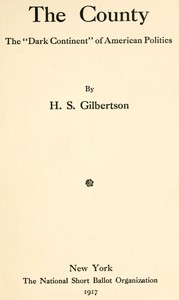
The County: The "Dark Continent" of American Politics Book Summary
The book "The County: The 'Dark Continent' of American Politics" by A.F. Macdonald, published in 1940, explores the often overlooked but crucial role of counties in the American political system. It delves into the historical development, structure, functions, and significance of counties in the United States, highlighting their importance in local governance and their relationship with state and federal governments.
The book provides a comprehensive overview of the American county as a political entity. It covers the historical origins of counties, their evolution, and their current functions and structures. The author examines the various roles counties play in governance, including law enforcement, public health, education, and infrastructure. The book also discusses the challenges and complexities of county government, such as the relationship between elected officials and administrative staff, the impact of state and federal policies, and the need for reform and modernization.
Lesson 1: The Historical Significance of Counties
Counties have been a fundamental part of American governance since colonial times. They were originally established to serve as administrative divisions for states, providing local governance and services. Over time, counties have evolved to meet the changing needs of their communities, but their core role in local administration remains.
Lesson 2: The Structure and Functions of County Government
County governments are typically structured with a board of commissioners or supervisors, an elected sheriff, and various appointed officials. They are responsible for a wide range of services, including law enforcement, public health, education, and infrastructure maintenance. The book highlights the complexity of county government and the challenges it faces in delivering these services effectively.
Lesson 3: The Relationship Between Counties and Higher Levels of Government
Counties operate within a framework of state and federal laws and regulations. The book discusses how state and federal policies can impact county governance, often creating challenges for local officials who must navigate complex regulatory environments. It also explores the need for greater autonomy and flexibility for counties to address local needs effectively.
Lesson 4: The Challenges and Opportunities for County Reform
The book identifies several areas where county governments could be reformed to improve efficiency and effectiveness. These include modernizing administrative practices, enhancing transparency and accountability, and fostering greater collaboration between counties and other levels of government. The author argues that such reforms are essential for counties to meet the evolving needs of their communities.
This book is ideal for readers interested in the intricacies of American local government, particularly the role of counties. It is well-suited for students of political science, public administration, and history, as well as for local government officials and policymakers. The book provides a thorough and insightful analysis of county government, making it a valuable resource for anyone seeking to understand the complexities of local governance in the United States.
Yes, the book remains relevant today as counties continue to play a vital role in American governance. While some aspects of county government have evolved since the book's publication, the fundamental challenges and issues it addresses are still pertinent. The book's insights into the relationship between counties and higher levels of government, as well as its recommendations for reform, are particularly relevant in the current political climate.
| Reading on Gutenburg | Free reading |
| Get Paperback Version on Amazon | Buy a book |
| Suggest Book : The New Localism: How Cities Can Thrive in the Age of Populism Book | Get on Amazon |
In conclusion, "The County: The 'Dark Continent' of American Politics" offers a comprehensive and insightful examination of the role of counties in the American political system. While it was published in 1940, its analysis remains relevant today, providing valuable insights into the challenges and opportunities facing local governance. For readers interested in further exploring the dynamics of local government and its relationship with higher levels of governance, "The New Localism: How Cities Can Thrive in the Age of Populism" is a recommended read. This book builds on the themes discussed in "The County" and offers a contemporary perspective on the evolving role of local governments in the 21st century.