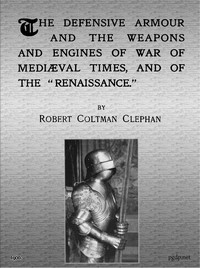
The Defensive Armour and the Weapons and Engines of War of Mediæval Times, and of the "Renaissance." Book Summary
Published in 1903, The Defensive Armour and the Weapons and Engines of War of Mediæval Times, and of the "Renaissance" by Charles Boutell is a fascinating, though somewhat dated, deep dive into the military technology of the medieval and Renaissance periods. Boutell, a noted authority on armour, doesn't just list types of weapons; he meticulously describes their construction, evolution, and use. It's a product of its time, reflecting the Victorian interest in historical detail and chivalry, but it remains a valuable resource for anyone curious about the arms and armour of these eras.
This book is a comprehensive survey of the armour, weapons, and siege engines used from roughly the 11th century through the 16th century. It begins with a detailed examination of the development of armour, tracing its progression from mail and early plate armour to the highly refined suits worn by knights in the 15th and 16th centuries. Boutell then covers a wide range of offensive weapons – swords, lances, axes, maces, bows, and early firearms – explaining their mechanisms and tactical applications. A significant portion is dedicated to siege warfare, outlining the design and operation of catapults, trebuchets, battering rams, and the fortifications built to withstand them. The book is heavily illustrated with detailed engravings, making it a visually rich experience.
One of the most striking takeaways from Boutell’s work is the constant arms race between offense and defense. Armour didn't simply become “better” over time; it constantly adapted to counter new weapons. The rise of the crossbow, for example, necessitated thicker plate armour, which in turn spurred the development of more powerful siege engines and, eventually, firearms. He illustrates this with the evolution of helmet designs, showing how visor slits were narrowed and reinforced to defend against increasingly accurate attacks. This dynamic interplay highlights a fundamental principle of warfare: innovation in one area inevitably leads to counter-innovation in another.
Boutell also emphasizes the immense skill and craftsmanship involved in creating medieval and Renaissance arms and armour. These weren’t mass-produced items; each suit of armour was meticulously fitted to the individual wearer by highly skilled armourers. He provides detailed descriptions of the forging, tempering, and polishing processes, as well as the intricate techniques used to create decorative elements. The book reveals that armour wasn’t just functional protection, but also a significant art form, reflecting the wealth and status of its owner. The sheer amount of labor involved explains why armour was so expensive and reserved for the elite.
Furthermore, the book demonstrates the importance of understanding the context of warfare. Boutell doesn't just describe weapons; he explains *how* they were used on the battlefield, within the constraints of medieval tactics and logistics. For instance, he details how the longbow’s effectiveness relied not just on the weapon itself, but also on the training and discipline of the English archers, and the terrain they chose to fight on. He also clarifies the roles of different types of troops – knights, men-at-arms, archers, and pikemen – and how they coordinated in battle. This holistic approach underscores that military success depends on more than just superior technology.
Finally, the book provides a vivid picture of the transition from medieval to Renaissance warfare. The gradual introduction of gunpowder weapons, initially crude but rapidly improving, fundamentally altered the nature of conflict. Boutell documents the early development of cannons and handguns, and their increasing impact on sieges and battles. He notes how fortifications were adapted to withstand cannon fire (leading to the development of star forts), and how armourers began to incorporate elements designed to deflect bullets. This shift marks a pivotal moment in military history, and Boutell's detailed account captures the anxieties and adaptations of the time.
This book is ideal for readers who:
- Have a strong interest in medieval and Renaissance history.
- Are fascinated by military technology and the evolution of weaponry.
- Appreciate detailed historical descriptions and technical illustrations.
- Enjoy a slightly academic, but still accessible, writing style.
- Want a comprehensive overview of arms and armour, rather than a focus on specific battles or figures.
Yes, this book still matters today, primarily as a valuable historical source and a testament to the ingenuity of medieval and Renaissance engineers and craftsmen. While the technology is obviously obsolete, the underlying principles of defense, offense, and the arms race remain eternally relevant. Understanding how past societies approached warfare can offer insights into contemporary conflicts and the ongoing development of military technology. However, the book’s age means its interpretations are sometimes outdated, and it lacks the benefit of more recent archaeological discoveries.
The next book to read would be Medieval Warfare: A History by Maurice Keen. Keen’s work builds upon the foundation laid by authors like Boutell, incorporating more modern scholarship and providing a broader social and political context for medieval warfare. It offers a more nuanced understanding of the tactics, strategies, and motivations of the combatants, and addresses some of the limitations of earlier works like Boutell’s.
| Reading on Gutenburg | Free reading |
| Get Paperback Version on Amazon | Buy a book |
| Suggest Book : Medieval Warfare: A History Book | Get on Amazon |
The Defensive Armour and the Weapons and Engines of War of Mediæval Times, and of the "Renaissance" is a classic work of historical scholarship, offering a remarkably detailed and visually engaging account of medieval and Renaissance military technology. While it's a product of its time, its insights into the arms race, craftsmanship, and context of warfare remain valuable for anyone interested in this fascinating period of history. It’s a great starting point, but should be supplemented with more recent scholarship for a complete picture.