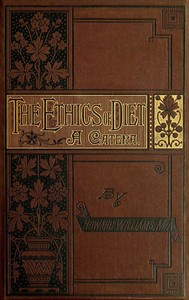
The Ethics of Diet A Catena of Authorities Deprecatory of the Practice of Flesh Eating Book Summary
Published in 1896, The Ethics of Diet is a fascinating, if somewhat lengthy, compilation of arguments against eating meat. Compiled by Howard Williams, it isn't a single, cohesive argument *by* Williams, but rather a 'catena' – a linked series of quotations – from a wide range of historical and contemporary thinkers. Think of it as a Victorian-era 'greatest hits' of anti-meat philosophy. It's a product of its time, reflecting the burgeoning ethical and health movements of the late 19th century.
The book systematically presents arguments against consuming animal flesh, drawing on the writings of philosophers, poets, scientists, religious figures, and medical professionals from ancient times through the 19th century. It covers a broad spectrum of reasoning, including moral arguments about the suffering inflicted on animals, health concerns related to meat consumption, spiritual justifications for a plant-based diet, and even economic and aesthetic considerations. It's less a 'how-to' guide for vegetarianism and more a comprehensive 'why' – a moral and intellectual case for abstaining from meat.
One of the most striking themes throughout The Ethics of Diet is the consistent condemnation of causing unnecessary suffering. Authors cited repeatedly emphasize that animals, like humans, are sentient beings capable of feeling pain and fear. Figures like Plutarch and Shelley argue that simply because we *can* exploit animals doesn't mean we *should*. This isn't presented as a radical new idea, but rather as a rediscovery of ancient wisdom, a moral principle that should be self-evident. The book highlights how our dietary choices directly contribute to this suffering, and challenges the reader to consider whether the pleasure derived from eating meat justifies the pain inflicted.
The book also makes a surprisingly modern case for the health benefits of a plant-based diet. While the scientific understanding of nutrition in the 1890s was far less advanced than today, many of the cited authors observed and documented the negative health consequences associated with meat consumption. They linked meat-eating to diseases like gout, indigestion, and nervous disorders, and conversely, noted the vitality and longevity of those who followed vegetarian or fruitarian lifestyles. These observations, though lacking the rigor of modern studies, foreshadowed many of the health arguments used by vegetarians and vegans today. The emphasis is on the idea that a simpler, more natural diet is more conducive to health and well-being.
Beyond the moral and health arguments, The Ethics of Diet explores the spiritual and philosophical implications of our food choices. Several authors connect the act of killing and consuming animals to a coarsening of the human spirit, arguing that it fosters cruelty and diminishes our capacity for empathy. They propose that a diet based on the fruits of the earth promotes peace, compassion, and a closer connection to nature. This line of reasoning draws heavily on Eastern philosophies like Buddhism and Hinduism, which emphasize non-violence (ahimsa) as a core principle. The book suggests that what we eat isn't just a matter of physical sustenance, but also a reflection of our inner state and our relationship to the world around us.
Finally, the book subtly critiques the societal norms that normalize meat-eating. It points out the artificiality of the meat industry and the disconnect between consumers and the origins of their food. Authors question the necessity of meat in a world where abundant plant-based alternatives are available, and challenge the idea that meat is essential for strength or virility. This critique anticipates many of the concerns raised by contemporary food activists and advocates for sustainable agriculture. It encourages readers to think critically about the cultural and economic forces that shape their dietary habits.
This book is ideal for readers who:
- Are interested in the *history* of vegetarianism and animal ethics.
- Enjoy reading philosophical and literary arguments.
- Appreciate a wide range of perspectives on a single topic.
- Are looking for a comprehensive, albeit dated, exploration of the reasons to avoid meat.
- Don't mind a somewhat dense and repetitive reading experience (due to the 'catena' format).
Yes, absolutely. While some of the scientific claims are outdated, the core ethical and philosophical arguments remain powerfully relevant. The book serves as a reminder that the debate over the ethics of eating meat is not new, and that many of the concerns we have today were already being voiced over a century ago. It’s a valuable historical document that sheds light on the evolution of our thinking about animals and our responsibilities towards them.
However, given the advancements in nutritional science and animal welfare research, a more contemporary work would be beneficial to follow up with.
| Reading on Gutenburg | Free reading |
| Get Paperback Version on Amazon | Buy a book |
| Suggest Book : Animal Liberation Book | Get on Amazon |
The Ethics of Diet is a remarkable compilation that offers a compelling, historically grounded case against eating meat. Though a product of its time, its enduring ethical and philosophical insights continue to resonate with readers today, making it a worthwhile read for anyone interested in the complex relationship between humans, animals, and our food choices.