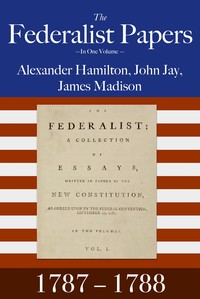
The Federalist Papers Book Summary
The Federalist Papers are a series of 85 essays written in 1788 by James Madison, Alexander Hamilton, and John Jay, under the pseudonym "Publius," to persuade the citizens of New York to adopt the newly proposed Constitution of the United States. More than just a historical document, it's a foundational text for understanding American political thought and the very structure of our government.
At its core, The Federalist Papers is a defense of the United States Constitution. Following the Articles of Confederation, which proved too weak to effectively govern the new nation, a Constitutional Convention was held in Philadelphia. The resulting document sparked fierce debate, particularly in New York, where concerns about centralized power were strong. Hamilton, Madison, and Jay responded with these essays, systematically addressing and rebutting the arguments of the Anti-Federalists – those who opposed the Constitution. Each paper tackles a specific aspect of the proposed government, explaining its rationale, its safeguards against tyranny, and its overall benefits for the nation.
The Importance of a Large Republic: One of the most crucial arguments made in The Federalist Papers, particularly in Federalist No. 10 by James Madison, is that a large republic is better equipped to control the dangers of faction (groups united by common interests, potentially at odds with the rights of others or the common good). Madison argued that in a small republic, a single faction could easily dominate. However, in a larger republic, with a greater variety of interests, any single faction would be less likely to gain a majority and oppress others. This idea is fundamentally about preventing tyranny of the majority through diversity and representation.
Separation of Powers and Checks & Balances: Hamilton, in several essays (most notably Federalist No. 51), brilliantly explains the necessity of dividing governmental power among different branches – the legislative, executive, and judicial – and giving each branch the means to check the power of the others. He argues that ambition must be made to counteract ambition. If any one branch becomes too powerful, the others can restrain it. This system isn't about efficiency; it’s about preventing any single person or group from accumulating too much control. Think of it like building a house with multiple support beams – if one fails, the others hold it up. This is the cornerstone of the American system of governance.
Judicial Review: While not explicitly stated as a defined power, the concept of judicial review – the ability of the courts to declare laws unconstitutional – is heavily implied within the papers, particularly concerning the role of the judiciary. The authors emphasized the judiciary’s independence and its role in interpreting the Constitution, suggesting that it would be the ultimate guardian of the people’s rights against legislative overreach. This idea, later solidified in Marbury v. Madison, ensures that laws align with the fundamental principles outlined in the Constitution.
The Necessity of Energy in the Executive: Hamilton argues persuasively for a strong, energetic executive branch in Federalist No. 70. He acknowledges concerns about potential tyranny but contends that a weak executive would be far more damaging, leading to instability and an inability to respond effectively to crises. He believed that decisive leadership was essential for good governance and that a single executive was better suited to provide that than a committee or council. He uses the analogy of a ship needing a single, firm hand at the helm to navigate safely.
This book is ideal for:
- Students of American History and Government: It’s essential reading for understanding the founding principles of the U.S.
- Political Science Enthusiasts: The essays offer profound insights into political theory, republicanism, and the challenges of self-governance.
- Anyone Interested in Constitutional Law: The arguments presented continue to be relevant in legal debates today.
- Citizens Seeking a Deeper Understanding of Their Government: It provides a foundational understanding of the ‘why’ behind the American political system.
Be warned: the language is 18th-century and can be dense. It requires patience and careful reading, but the rewards are substantial.
Absolutely. The debates surrounding the Constitution – the balance between liberty and security, the dangers of faction, the role of the judiciary – are as relevant today as they were in 1788. Issues like federalism, the scope of executive power, and the protection of minority rights are constantly being re-litigated in contemporary politics. Understanding the original intent behind the Constitution, as articulated in The Federalist Papers, is crucial for informed civic engagement.
The next book to read would be Antifederalist Papers. While The Federalist Papers present one side of the argument, the Antifederalist Papers offer a vital counterpoint. Reading both allows for a more nuanced understanding of the debates that shaped the Constitution and the concerns that were raised about its potential consequences. It's important to understand the opposition's arguments to truly grasp the compromises and principles that underpin the American system.
| Reading on Gutenburg | Free reading |
| Get Paperback Version on Amazon | Buy a book |
| Suggest Book : Antifederalist Papers Book | Get on Amazon |
The Federalist Papers is a challenging but ultimately rewarding read. It's a timeless exploration of the principles of republican government and a powerful defense of the Constitution. While demanding, it offers invaluable insights into the foundations of the United States and continues to inform political discourse today. It remains a cornerstone of American political thought and a must-read for anyone seeking a deeper understanding of the nation’s origins and enduring values.