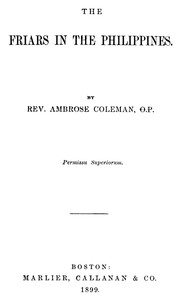
The Friars in the Philippines Book Summary
The book The Friars in the Philippines by Ambrose Coleman is a historical account of the significant role played by the Spanish friars in the Philippines during the Spanish colonial period. It provides a detailed examination of their contributions to the religious, educational, and social development of the islands, as well as their interactions with the native population and the colonial government.
This book delves into the establishment and growth of the Catholic Church in the Philippines under the Spanish rule, focusing on the various religious orders such as the Augustinians, Dominicans, Franciscans, and Jesuits. It explores their missionary efforts, the construction of churches and schools, and their influence on the cultural and social fabric of the country. The book also addresses the controversies and conflicts that arose between the friars and other colonial authorities, as well as the eventual decline of their power and influence.
Role of Friars in Colonial Society: The friars were not only religious leaders but also played a crucial role in the administration and governance of the Philippines. They were instrumental in converting the native population to Christianity and establishing a network of churches and schools that helped spread Spanish culture and language.
Cultural and Educational Contributions: The friars established schools and universities, contributing significantly to the educational development of the Philippines. They also introduced new agricultural techniques, crops, and livestock, which had a lasting impact on the local economy and society.
Conflicts and Controversies: The book highlights the tensions that existed between the friars and the Spanish colonial government, as well as between the friars and the native population. These conflicts often revolved around issues of land ownership, taxation, and the friars' resistance to secularization efforts.
Decline of Friar Power: The book discusses the factors that led to the decline of the friars' influence, including the rise of nationalist movements and the eventual secularization of the church. It also explores the impact of these changes on the Philippine society and the Catholic Church.
This book is ideal for readers interested in:
- The history of the Catholic Church in the Philippines.
- The role of religious orders in colonial societies.
- The cultural and social impact of Spanish colonization in the Philippines.
- The conflicts and challenges faced by the friars during their mission.
Yes, the book is still relevant today as it provides valuable insights into the historical and cultural foundations of the Philippines. Understanding the role of the friars is crucial for comprehending the country's colonial past and its lasting effects on modern Filipino society. For those interested in further exploring the impact of religious orders in colonial contexts, I recommend reading The Jesuits: A History by John W. O'Malley.
| Reading on Gutenburg | Free reading |
| Get Paperback Version on Amazon | Buy a book |
| Suggest Book : The Jesuits: A History Book | Get on Amazon |
The Friars in the Philippines is a comprehensive and insightful account of the significant role played by the Spanish friars in the Philippines. It offers a detailed examination of their contributions to the religious, educational, and social development of the islands, as well as their interactions with the native population and the colonial government. The book is a valuable resource for anyone interested in the history of the Catholic Church in the Philippines and the impact of Spanish colonization on the country.