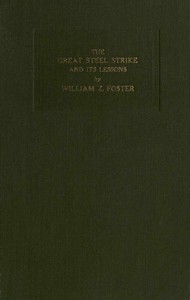
The Great Steel Strike and its Lessons Book Summary
"The Great Steel Strike and its Lessons" by William Z. Foster, published in 1920, is an in-depth analysis of the 1919 steelworkers' strike in the United States. Foster, a prominent labor organizer and later a leader of the Communist Party USA, provides a detailed account of the strike's origins, its challenges, and its eventual failure. The book serves as both a historical record and a critical examination of labor strategies and tactics during a pivotal moment in American labor history.
The book "The Great Steel Strike and its Lessons" is about the 1919 steelworkers' strike, one of the largest and most significant labor actions in American history. The strike involved hundreds of thousands of steelworkers across the country, demanding better wages, shorter working hours, and the right to unionize. William Z. Foster, who played a key role in organizing the strike, provides a comprehensive account of the events leading up to the strike, the challenges faced by the workers, and the reasons for its failure. The book also offers critical lessons and reflections on labor organizing and the strategies needed for future labor movements.
Lesson 1: The Importance of Solidarity and Unity
The strike highlighted the critical need for unity among workers. The steel industry was heavily divided along ethnic and racial lines, and the lack of solidarity among workers weakened the strike. Foster emphasizes that a united front is essential for the success of any labor movement.Lesson 2: The Role of Public Opinion and Media
The steel companies and their allies in the media successfully portrayed the strike as un-American and influenced public opinion against the workers. Foster argues that labor movements must actively engage with the media and work to shape public opinion in their favor.Lesson 3: The Need for Strategic Planning
The strike was not adequately planned, and the workers were not sufficiently prepared for the challenges they faced. Foster stresses the importance of careful planning and preparation in organizing large-scale strikes.Lesson 4: The Power of Employer Resistance
The steel companies used a variety of tactics to break the strike, including hiring strikebreakers, using violence, and leveraging their political influence. Foster underscores the need for labor movements to anticipate and counter such resistance.Lesson 5: The Role of Government
The government, particularly at the federal level, sided with the employers during the strike. Foster highlights the importance of political engagement and the need for labor movements to build alliances with sympathetic political forces.
This book is fit for readers interested in labor history, social movements, and the dynamics of industrial conflict. It provides valuable insights into the challenges faced by workers in the early 20th century and the strategies that can be employed to overcome them. The book is particularly relevant for labor organizers, activists, and students of labor relations.
Yes, the lessons from "The Great Steel Strike and its Lessons" are still relevant today. Many of the challenges faced by workers in 1919, such as employer resistance, media manipulation, and the need for unity and strategic planning, continue to be relevant in contemporary labor struggles. The book offers timeless insights into the dynamics of labor movements and the strategies needed to achieve success.
For those interested in understanding modern labor movements, I suggest reading "No Shortcuts: Organizing for Power in the New Gilded Age" by Jane F. McAlevey. This book provides a contemporary analysis of labor organizing and offers practical strategies for building effective labor movements in the 21st century.
| Reading on Gutenburg | Free reading |
| Get Paperback Version on Amazon | Buy a book |
| Suggest Book : No Shortcuts: Organizing for Power in the New Gilded Age Book | Get on Amazon |
"The Great Steel Strike and its Lessons" by William Z. Foster is a seminal work that provides a detailed and critical analysis of one of the most significant labor strikes in American history. The book's insights into the importance of unity, strategic planning, and the challenges posed by employers and the media remain relevant today. It is a must-read for anyone interested in labor history and the dynamics of social movements.