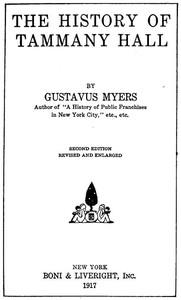
The History of Tammany Hall Second Edition Book Summary
"The History of Tammany Hall" is a detailed account of the Tammany Society, a political organization in New York City that wielded significant influence from the late 18th century through the early 20th century. The book, written by Gustavus Myers and originally published in 1901, explores the rise and fall of Tammany Hall, its impact on New York politics, and the corruption that often accompanied its power.
This book is a historical examination of Tammany Hall, a Democratic Party political machine that played a major role in New York City politics. It covers the organization's origins, its growth into a powerful political force, and its eventual decline. The narrative includes detailed accounts of key figures, political maneuvers, and the systemic corruption that characterized Tammany Hall's operations.
Lesson 1: The Power of Political Machines
Tammany Hall exemplifies how political machines can dominate local politics through a combination of patronage, corruption, and voter manipulation. The organization provided social services and jobs to immigrants and the poor in exchange for their votes, ensuring its continued power.
Lesson 2: Corruption and Reform
The book highlights the pervasive corruption within Tammany Hall, including bribery, election fraud, and embezzlement. However, it also shows how public outrage and reform efforts eventually led to its downfall, illustrating the cyclical nature of corruption and reform in politics.
Lesson 3: The Role of Leadership
Key figures like William M. Tweed, known as "Boss Tweed," played a crucial role in Tammany Hall's rise and fall. Their leadership styles and actions significantly impacted the organization's success and its public perception.
This book is ideal for readers interested in:
- Understanding the history of political machines in the United States.
- Exploring the dynamics of corruption and reform in politics.
- Learning about the role of Tammany Hall in New York City's development.
- Studying the impact of leadership on political organizations.
Yes, the lessons from "The History of Tammany Hall" are still relevant today. Political machines and corruption continue to be issues in modern politics, and understanding the past can provide insights into current political dynamics. For a more contemporary look at political corruption, consider reading "This Town" by Mark Leibovich, which explores the culture of Washington, D.C., and its similarities to historical political machines.
| Reading on Gutenburg | Free reading |
| Get Paperback Version on Amazon | Buy a book |
| Suggest Book : This Town Book | Get on Amazon |
"The History of Tammany Hall" offers a comprehensive look at one of the most notorious political machines in American history. Its detailed narrative and analysis provide valuable lessons about power, corruption, and the importance of civic engagement. While the book is over a century old, its themes remain relevant, making it a worthwhile read for anyone interested in politics and history.