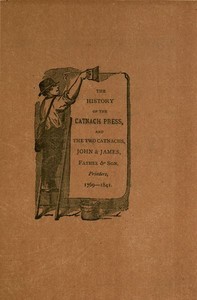
The History of the Catnach Press at Berwick-Upon-Tweed, Alnwick and Newcastle-Upon-Tyne, in Northumberland, and Seven Dials, London Book Summary
Book Overview
This historical account chronicles the existence and activities of the Catnach Press, focusing on its locations in Berwick-Upon-Tweed, Alnwick, Newcastle-Upon-Tyne in Northumberland, and Seven Dials in London. The narrative centers on Robert Catnach, his family, and their involvement in printing works, particularly highlighting their technical innovations and their crucial role in producing politically charged literature, including works by notable radicals like Thomas Paine and William Thompson. The book explores the challenges they faced, their printing techniques, and their significant contribution to the spread of Enlightenment and reformist ideas during the early 19th century.Key Insights
1. The Power of Print in Political Change: The Catnach Press exemplifies how printing technology could be a powerful tool for political mobilization. Operating during a time of intense debate over reform, liberty, and social change, Catnach and his family used their press to produce and distribute radical pamphlets and books that reached a wide audience. For instance, their work was instrumental in disseminating Thomas Paine's radical ideas, challenging established authorities and fueling public discourse.
2. Technical Skill and Innovation as a Necessity: Running a successful printing business, especially for cheap and large quantities, required exceptional technical expertise. Catnach was renowned for his skill in producing high-quality, durable type and employing efficient printing methods. His ability to hand-set type quickly and effectively allowed his press to produce thousands of copies of radical works, demonstrating that technical mastery was not merely an art but a crucial business and political necessity during this era.
3. Navigating Censorship and Danger: The Catnach family operated in a climate of intense political censorship and surveillance. Many of their publications were banned or suppressed, making their work inherently dangerous. Yet, they persisted, often operating out of different locations to evade authorities. Their success highlights the courage required to challenge powerful institutions and the importance of distribution networks, secrecy, and perhaps even luck, in overcoming censorship.
4. Family Collaboration and Entrepreneurship: The history of the Catnach Press is deeply intertwined with the lives and skills of the Catnach family members. It was often a collaborative effort, showcasing how family businesses could achieve significant impact through shared knowledge and labor. This underscores the entrepreneurial spirit required to sustain a printing business focused on challenging, unprofitable material against the backdrop of state censorship.
Who Should Read This?
- History enthusiasts, particularly those interested in 19th-century British social and political history.
- Those fascinated by the history of printing, typography, and publishing technology.
- Individuals studying the history of radicalism, reform movements (like the Peterloo Massacre), or the Enlightenment in Britain.
- Students or academics researching censorship, free speech, or the mechanics of information dissemination.
- Anyone interested in the role of 'ordinary' people (like printers and their families) in shaping historical events.
Enduring Relevance
Yes, the story of the Catnach Press remains highly relevant today. It serves as a powerful historical precedent for the ongoing struggles around free speech, censorship, and the role of media in democracy. The techniques used for censorship then echo contemporary debates about content moderation online and restrictions on information. Furthermore, the book underscores the critical role of skilled labor and infrastructure (printing presses) in enabling the spread of ideas, a dynamic still central to our information age, albeit with digital tools replacing presses. The challenges of producing and distributing challenging ideas while facing institutional opposition are timeless themes.
| Reading on Gutenburg | Free reading |
| Get Paperback Version on Amazon | Buy a book |
| Suggest Book : The Radical Print: Culture and Propaganda in Enlightenment Britain Book | Get on Amazon |
Conclusion
'The History of the Catnach Press' offers a detailed and engaging look at a pivotal but often overlooked figure in early 19th-century British history. It reveals the intricate connection between technical skill, political courage, and the vital work of printing in shaping public opinion. This book is essential reading for anyone interested in the mechanics of political change, the history of radicalism, or the enduring power and fragility of the printed word. It stands as a testament to the crucial role played by dedicated individuals in the fight for ideas and information freedom.