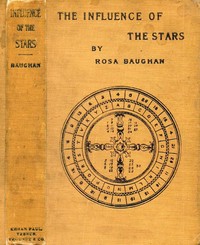
The influence of the stars Book Summary
One of the central lessons of "The Influence of the Stars" is the concept of cosmic correspondence. Sepharial argues that everything in the universe – from the grandest celestial bodies to the smallest earthly creatures – is interconnected and reflects a common underlying pattern. He uses the Kabbalistic Tree of Life as a framework to demonstrate how astrological symbols correspond to specific spiritual forces and archetypes. For example, the planet Saturn isn't just about limitations and hardship; it's linked to the Sephirah Binah, representing understanding, form, and the Great Mother archetype. Understanding these correspondences allows for a deeper, more nuanced interpretation of a birth chart, moving beyond simple planetary descriptions.
Another key idea is the importance of chart rectification. Sepharial believed that most people don't know their exact birth time, and an inaccurate chart can lead to misleading interpretations. He outlines a detailed method for rectifying a chart based on significant life events – what he calls 'planetary signatures' – and aligning them with the appropriate astrological positions. This process isn't about finding the 'right' answer, but about uncovering the most resonant and meaningful astrological picture of a person's life. It's a detective-like approach, requiring careful observation and intuitive understanding.
The book also emphasizes the spiritual purpose of astrology. Sepharial wasn't interested in using astrology for mundane predictions like winning the lottery. He saw it as a tool for self-discovery, spiritual growth, and understanding one's place in the cosmos. The challenges and opportunities revealed in a birth chart are viewed as lessons designed to help the individual evolve and fulfill their divine potential. This perspective shifts the focus from fate to free will, suggesting that we have the power to work with the energies indicated in our charts to create a more meaningful life.
Finally, Sepharial introduces a unique system of planetary hours and days, linking each day of the week to a specific planet and assigning planetary hours based on the sunrise. This system is used to determine the most auspicious times for undertaking certain activities, aligning with the energies of the ruling planet. While this aspect might seem overly specific or ritualistic to modern readers, it highlights the ancient belief in the power of timing and the importance of living in harmony with the natural rhythms of the universe.
- Have some existing knowledge of astrology, particularly the basics of planets, signs, and houses.
- Are interested in esoteric traditions like Kabbalah and Western mysticism.
- Enjoy symbolic thinking and are comfortable with complex systems of correspondence.
- Are seeking a deeper, more spiritual understanding of astrology beyond simple predictions.
- Are patient and willing to engage with a dense and challenging text.
| Reading on Gutenburg | Free reading |
| Get Paperback Version on Amazon | Buy a book |
| Suggest Book : Cosmos and Psyche Book | Get on Amazon |