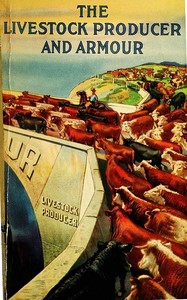
The Livestock Producer and Armour Book Summary
The Livestock Producer and Armour
A practical guide for farm owners and managers focusing on the technical aspects of livestock production during the early 20th century.
Book Overview
"The Livestock Producer and Armour" is a guide written primarily for individuals engaged in raising livestock, likely farmers and ranchers. Published around 1914, it covers a wide range of practical topics essential for successful farm management and animal husbandry. The book delves into specific areas like feeding strategies, housing requirements, health management techniques, breeding practices, and record-keeping. Its tone is instructional and assumes a basic understanding of farming, aiming to provide detailed, step-by-step advice based on the agricultural science and technologies available at the time.
Key Lessons & Insights
1. Feeding is Paramount: The book emphasizes understanding the nutritional needs of different animals (cattle, sheep, pigs, poultry) based on their age, breed, and production stage (e.g., milk production, growth, breeding). It details various feed sources, the importance of balanced rations, and methods for preserving feed like silage and haylage. A significant portion is dedicated to the economics of feeding, stressing cost-effective practices. For example, it advises on when to supplement natural forage with grain or imported feeds, considering price fluctuations and local availability.
2. Practical Husbandry and Housing: Detailed instructions are provided for constructing and maintaining appropriate housing for livestock, focusing on comfort, hygiene, and protection from weather and pests. Ventilation, drainage, and space requirements are discussed. It also covers practical aspects of daily care like grooming, hoof trimming, and handling animals safely. The book stresses how proper housing directly impacts animal health and productivity, preventing common diseases associated with damp, unsanitary conditions.
3. Health Management and Preventative Care: While not a veterinary textbook, the book offers advice on recognizing common diseases, basic first aid, and the importance of vaccination programs where available. A major focus is on preventative measures – clean surroundings, balanced nutrition, adequate shelter, and stress reduction. It outlines rudimentary record-keeping for animal health observations and treatment, enabling producers to track patterns and prevent outbreaks. Parasite control (internal and external) is presented as a critical management task.
4. Reproduction and Breeding Records: Guidance is given on selecting breeding stock based on desired traits (productivity, temperament, hardiness). The book covers artificial insemination techniques (if accessible) and natural mating procedures. Crucially, it advocates for meticulous record-keeping of breeding dates, animal performance, and offspring characteristics. This data-driven approach was intended to systematically improve herd genetics over generations, moving away from purely random or tradition-based breeding practices.
5. Financial Prudence and Record-Keeping: A recurring theme is managing the farm business efficiently. The book includes sections on calculating costs (labor, feed, repairs), setting prices for products, and maintaining detailed financial and operational records. This practical financial advice aimed to help producers understand their costs of production and make informed decisions to ensure the economic viability of their livestock operation.
Is This Book Fit for You?
- If you are researching historical farming practices or 20th-century agricultural manuals.
- If you are interested in the evolution of animal husbandry techniques and farm management.
- If you are a student of history, agriculture, or rural studies needing primary source material.
- If you are a modern livestock producer seeking foundational principles (adjusting for technological advancements).
- If you are curious about the practical challenges faced by farmers a century ago.
Does It Still Matter Today?
Yes, this book offers valuable historical context and foundational knowledge, even today. The core principles of providing adequate nutrition, maintaining clean housing, practicing preventative health care, keeping detailed records, and managing finances are timeless aspects of successful livestock production. Understanding the challenges and solutions from the early 1900s provides insight into the evolution of modern practices. However, much of the specific technology, disease prevalence, feed options, and labor structures have changed significantly. Modern producers rely heavily on scientific advancements in veterinary medicine, feed formulation, genetics, and equipment. Therefore, while the book's specific advice might need updating, its underlying principles remain relevant for learning about the fundamentals of responsible and efficient livestock farming.
| Reading on Gutenburg | Free reading |
| Get Paperback Version on Amazon | Buy a book |
| Suggest Book : Modern Farming and Animal Husbandry Principles Book | Get on Amazon |
Conclusion
"The Livestock Producer and Armour" is a product of its time, offering a comprehensive, practical guide for farm managers focused on the technical and economic aspects of livestock production in the early 1900s. While outdated in specific details and technology, it remains a valuable resource for historians, students, and modern farmers seeking to understand the foundational principles and challenges of traditional livestock farming. Its detailed approach to feeding, housing, health, breeding, and record-keeping provides a window into past agricultural practices and underscores the enduring importance of sound management in the livestock industry.