The Natural Philosophy of William Gilbert and His Predecessors Book Summary
Introduction
The Natural Philosophy of William Gilbert and His Predecessors delves into the scientific thought and methodologies of the key figures who shaped the foundations of modern physics, particularly in the study of electricity and magnetism, leading up to William Gilbert's groundbreaking work in the 16th century. This text positions Gilbert not just as an experimenter but as a pivotal figure who transitioned natural philosophy from the medieval reliance on ancient authorities towards a more empirical and inductive approach.
What is this book about?
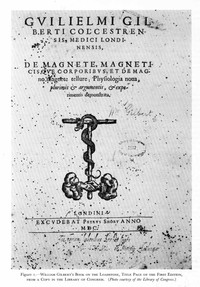
This historical study focuses on the development of scientific ideas surrounding magnetism and electricity from antiquity through the Renaissance. It examines the works of major predecessors like Aristotle, Ptolemy, and ancient Greek philosophers, analyzing their theories, experiments (where known), and the philosophical underpinnings of their natural philosophy. The book then meticulously analyzes William Gilbert's De Magnete, highlighting his innovative use of experiments on diverse materials, his detailed observations, and his rejection of many prevailing Aristotelian notions. The central theme is how Gilbert synthesized the work of his predecessors and advanced the field through rigorous observation and experimentation, marking a crucial step towards the scientific revolution.
Key Lessons
1. The Crucial Shift to Empiricism: Before Gilbert, much natural philosophy was based on interpretations of ancient texts, particularly Aristotle. This book vividly illustrates how Gilbert broke away from this tradition. Instead of relying solely on philosophical reasoning, he stressed the necessity of direct observation and experimentation. He designed elaborate experiments, using lodestones, iron, amber, and various metals, often under different conditions. For example, he demonstrated that Earth is a giant magnet by showing its poles align with a compass needle, challenging the prevailing idea that magnetism was solely a property of lodestone. This lesson emphasizes the power of firsthand evidence over established dogma.
2. The Importance of Systematic Observation and Description: Gilbert meticulously documented his findings, paying close attention to details often overlooked. He described the properties of magnets and electrical materials with precision, noting differences between various types (like magnetite vs. loadstone) and observing phenomena like the 'Gilbertian' properties where rubbed amber or glass could attract light objects. His work moved beyond simple qualitative descriptions towards a more systematic classification and quantification of phenomena, laying the groundwork for the scientific method's emphasis on detailed data collection.
3. Gilbert's Inductive Method as a Foundational Principle: The book highlights Gilbert's use of induction – deriving general principles from specific observations. He didn't start with a preconceived theory and seek confirming evidence; instead, he systematically investigated numerous specific cases concerning magnetism and electricity, then generalized based on patterns observed. This approach, though perhaps less formalized than today's scientific method, was revolutionary and demonstrated how complex phenomena could be understood through careful accumulation and analysis of data from diverse instances.
4. The Value of Questioning Established Authorities: Gilbert was not afraid to challenge long-held beliefs. He critically examined and rejected many of Aristotle's explanations for magnetism and electricity, providing empirical evidence to refute them. This lesson underscores the necessity for scientists to rigorously test and potentially overturn established theories using evidence, rather than simply accepting tradition or ancient texts as absolute truth. Gilbert's willingness to do so was a direct catalyst for future scientific advancement.
Is this book fit for me?
Yes, this book is particularly suitable for:
- Individuals with a keen interest in the history of science, especially the Scientific Revolution and the development of experimental physics.
- Students of history, philosophy, or science who want to understand the roots of modern scientific methodology.
- Those curious about the minds and motivations behind key figures in early modern science, like Gilbert and his predecessors.
- Readers seeking insight into how scientific revolutions often begin by questioning fundamental assumptions.
- Anyone interested in the evolution of ideas surrounding magnetism, electricity, and the physical world.
Does it still matter today?
Absolutely. Gilbert's work in De Magnete established fundamental principles and experimental approaches that are still relevant. His insistence on empirical evidence over philosophical authority, his systematic inductive method, and his detailed observations form the bedrock of modern scientific practice. Understanding this transition is crucial for appreciating the foundations upon which all modern physics rests. The book remains essential for historians of science and serves as a powerful reminder of the importance of critical thinking, experimentation, and challenging established norms in the pursuit of knowledge.
| Reading on Gutenburg | Free reading |
| Get Paperback Version on Amazon | Buy a book |
| Suggest Book : The Structure of Scientific Revolutions Book | Get on Amazon |
Conclusion
In conclusion, 'The Natural Philosophy of William Gilbert and His Predecessors' offers a fascinating journey through a pivotal moment in scientific history. It portrays Gilbert as a revolutionary thinker who fundamentally altered the course of natural philosophy by championing empirical observation, systematic experimentation, and the courage to challenge ancient authorities. This detailed examination of his work and its context provides invaluable insight into the origins of the scientific method and the transformation of scientific thought, demonstrating how foundational ideas are born and how the persistent questioning of the natural world drives scientific progress. The book's exploration of the intellectual lineage leading to Gilbert underscores the enduring significance of understanding the past to illuminate the present and future of science.