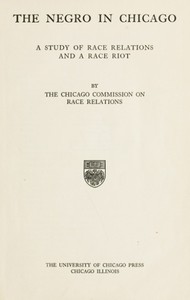
The Negro in Chicago: A Study of Race Relations and a Race Riot Book Summary
The Negro in Chicago: A Study of Race Relations and a Race Riot, published in 1922 by the Chicago Commission on Race Relations, provides a comprehensive analysis of the causes and consequences of the 1919 Chicago race riot, as well as an in-depth examination of race relations in the city. The book is a seminal work in the study of race relations and urban sociology, offering valuable insights into the social, economic, and political factors that contribute to racial tensions and violence.
The book is a detailed study of the 1919 Chicago race riot, which was one of the most violent and destructive race riots in American history. It examines the underlying causes of the riot, including racial discrimination, economic competition, housing segregation, and political disenfranchisement. The book also explores the aftermath of the riot and offers recommendations for improving race relations in Chicago and other cities.
- Racial Discrimination and Economic Competition: The book highlights how racial discrimination and economic competition between Black and White workers contributed to the tensions that led to the riot. For example, during World War I, many Black Southerners migrated to Chicago to work in factories, which created competition for jobs and housing with White workers.
- Housing Segregation: The book discusses how housing segregation and overcrowding in Black neighborhoods exacerbated racial tensions. The lack of adequate housing for Black residents led to increased rent and living costs, further straining relations between Black and White communities.
- Political Disenfranchisement: The book examines how Black residents were politically disenfranchised, with limited representation and influence in local government. This lack of political power made it difficult for Black residents to address their grievances and improve their living conditions.
- Violence and Its Aftermath: The book provides a detailed account of the riot itself, including the violence, destruction, and loss of life. It also examines the aftermath of the riot, including the impact on the Black community and the city's efforts to address the underlying issues.
- Recommendations for Improvement: The book concludes with recommendations for improving race relations in Chicago and other cities, including measures to address housing segregation, economic inequality, and political disenfranchisement.
This book is a valuable resource for anyone interested in the history of race relations in the United States, particularly in urban areas. It provides a detailed and nuanced analysis of the factors that contribute to racial tensions and violence, and offers practical recommendations for addressing these issues. However, the book is quite dense and may be challenging for readers who are not familiar with the historical context or the specific events of the 1919 Chicago race riot.
Yes, the issues of racial discrimination, economic inequality, housing segregation, and political disenfranchisement are still relevant today. The book's analysis of these issues and its recommendations for addressing them can provide valuable insights for contemporary readers interested in understanding and improving race relations in their own communities.
| Reading on Gutenburg | Free reading |
| Get Paperback Version on Amazon | Buy a book |
| Suggest Book : The Color of Law: A Forgotten History of How Our Government Segregated America by Richard Rothstein Book | Get on Amazon |
The Negro in Chicago: A Study of Race Relations and a Race Riot is a seminal work that provides a comprehensive analysis of the causes and consequences of the 1919 Chicago race riot, as well as an in-depth examination of race relations in the city. The book's insights into the social, economic, and political factors that contribute to racial tensions and violence are still relevant today, and its recommendations for improving race relations can provide valuable guidance for contemporary readers.