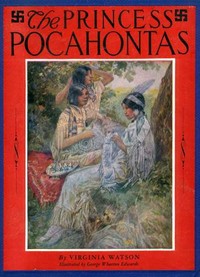
The Princess Pocahontas Book Summary
The book offers several thought-provoking insights:
1. The Subjectivity of History and Narrative: The book clearly demonstrates how historical figures, especially women and minorities, are often portrayed through the lens of the dominant culture's perspective. By writing from Pocahontas's perspective, the author challenges the traditional colonial narratives, inviting readers to consider the limitations and biases inherent in historical records. It shows how stories can be shaped by political and cultural agendas.
2. Assimilation and Cultural Identity: Pocahontas's journey is presented as one of adaptation and assimilation. The book explores the internal conflict of preserving her native identity while embracing English customs, language, religion, and even a changed name (Rebecca). This highlights the difficult choices individuals face when caught between cultures and the potential costs of seeking peace through cultural compromise. Her transformation is presented as both a choice and a necessity.
3. Power Dynamics and Manipulation: The narrative illustrates how power operated in the colonial context. Figures like John Smith and John Rolfe used Pocahontas and her family for political leverage. The book subtly shows how her position as a 'princess' and marriage became tools for diplomacy between the Powhatan and the English, highlighting the vulnerability of individuals within complex political systems.
4. The Complexity of Peace: The story underscores that peace between conflicting groups is often fragile and requires immense personal sacrifice. Pocahontas's marriage and actions were instrumental in temporarily easing tensions, but it did not resolve the underlying conflicts that eventually led to war. The book portrays the difficulties and compromises inherent in bridging vastly different worlds.
This book might be suitable for you if you are interested in:
- Early American colonial history and the first encounters between Europeans and Native Americans.
- Dramatic historical fiction that seeks to humanize a significant but often misunderstood historical figure.
- Exploring themes of identity, assimilation, and cultural conflict.
- Understanding the complexities of historical narratives and how they are constructed.
- Stories that focus on female perspectives in history.
Yes, the themes explored in "The Princess Pocahontas" continue to resonate today. Issues of cultural assimilation, identity, power dynamics, and the search for peace between conflicting groups are still relevant in our globalized world. The book prompts reflection on how we understand history, the treatment of minorities, and the personal and societal costs of bridging cultural divides.
Given its focus on intercultural relationships and the challenges of bridging different worlds, a recommended next book is Braided Together: Interracial Relationships in America from Colonial Times to the Present by Emily Bernard. This book explores the complexities and histories of interracial relationships in America, providing a broader context for understanding the dynamics that "The Princess Pocahontas" engages with.
| Reading on Gutenburg | Free reading |
| Get Paperback Version on Amazon | Buy a book |
| Suggest Book : The Family: A World History Book | Get on Amazon |
"The Princess Pocahontas" offers a compelling, albeit fictionalized, look at a pivotal historical figure and the tumultuous period of early American colonization. By centering the narrative on Pocahontas and her difficult choices, the book encourages readers to move beyond simplistic portrayals and consider the nuanced realities of cultural interaction, personal identity, and the complex pursuit of peace. It remains a valuable read for anyone interested in American history or the enduring human drama of navigating between different worlds.